Four doctoral candidates and one doctoral alumnus were inducted into the Cornell chapter of the Bouchet Graduate Honor Society, which recognizes scholarly achievement and promotes diversity in doctoral education.
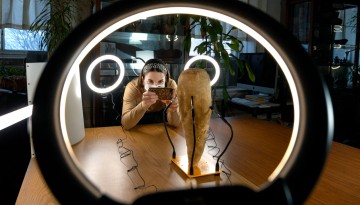
Master’s student Carol Anne Barsody is working with an array of interdisciplinary collaborators to explore the origins of a mummified bird and create a multisensory exhibition that rethinks the way ancient artifacts are presented in museums.
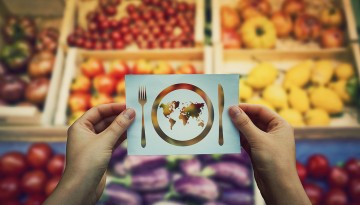
Forty-six high school students from 17 high schools across New York state came to the Cornell campus March 25 for discussions around innovative solutions to food security and climate change challenges.
Global food systems expert Johan Swinnen, Ph.D. ’92, will explore lessons learned during the pandemic and the steps needed to prevent a hunger catastrophe in the first talk of a new speaker series dedicated to confronting the world’s most urgent and complex challenges.
Three teams have been awarded Public Issue Network Grants, providing up to $30,000 in funding for each project over three years. The grants support faculty, staff, students, alumni and community partners as they weave broader, more effective networks of potential collaborators, coordinate resources and increase the impact of their work on a particular social issue.
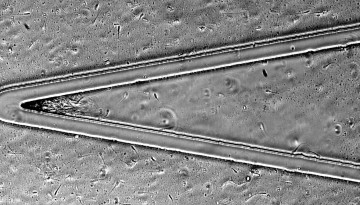
Forget sending bull semen out for complicated laboratory tests to learn whether the agricultural animal is virile. Cornell scientists have developed a faster, easier microfluidics method.
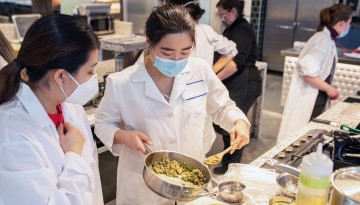
Students are now taking classes the Discovery Kitchen, a state-of-the-art teaching space built into the ground floor of Toni Morrison Hall on North Campus.
A Cornell-designed probe shows how water vapor penetrates powders and grains – a finding that could have wide-ranging applications in pharmaceutical research, agriculture and food processing, and planetary exploration.
Cornell received the grant to continue efforts to monitor and research the lower part of the food web, particularly zooplankton like Mysis and benthic invertebrates.