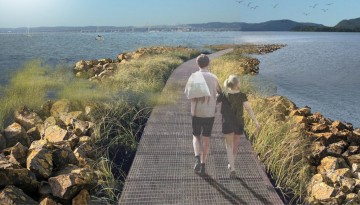
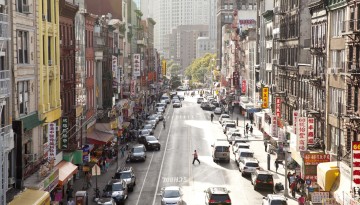
With the Hudson River rising from a fast-warming climate, the cities and towns along its banks now have an opportunity to save and reimagine their municipal waterfronts.
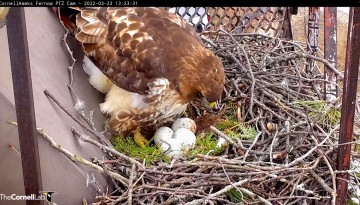
For the first time since the Lab of Ornithology installed a live camera on the nest in 2012, Big Red, the female red-tailed hawk, has produced a fourth egg during breeding season.
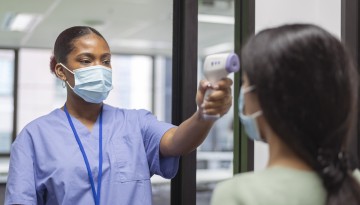
A Cornell collaboration crossing medicine, law, technology and communication is aiming to encourage the use of health care benefits by refugees in the U.S. – who often suffer poor health but are using these entitlements less than they have in the past.
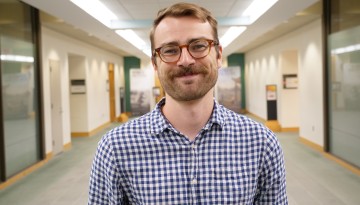
Bruno Shirley won Cornell’s Three Minute Thesis (3MT) competition. 3MT challenges graduate students to present their thesis research compellingly to general audiences in just three minutes.
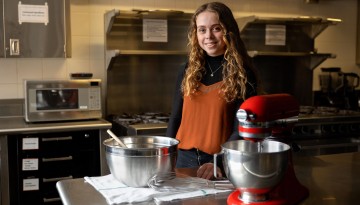
Cassidy Tryon won Food Network’s “Chopped Junior” at age 12, shortly before being diagnosed with Crohn's disease. She's now studying food science at Cornell while continuing to master cooking for her diet.
An exhibit at the Paleontological Research Institution’s Museum of the Earth in Ithaca – created in collaboration with Cornell entomologists – offers a fascinating education in the diversity of insects and their importance to life on Earth.
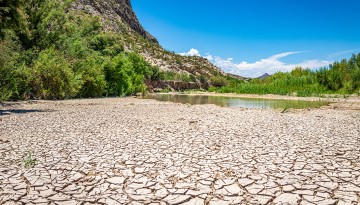
By the end of this century, Cornell’s Flavio Lehner and others said that megadroughts – extended drought events that can last two decades – will be more severe and longer in the western U.S. than they are today.
The Cornell Atkinson Center for Sustainability and Environmental Defense Fund collaborate on four Innovation for Impact Fund (IIF) awards to foster creative collisions that provoke large-scale, long-term change.
Artificial Intelligence, Design + Technology and Quantum Science and Technology will become part of “Radical Collaboration Drives Discovery,” bringing to 10 the number of initiatives in the provost office’s five-year-old program.