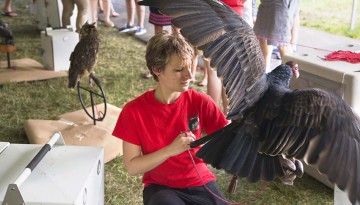
Student and faculty researchers and their community partners will use this year’s Engaged Cornell research grants to study Cornell’s socioeconomic impact on Tompkins County and other topics.
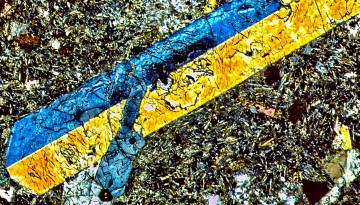
Far below Bermuda’s pink sand beaches and turquoise tides, Cornell geoscientists have found the first direct evidence that material from deep within Earth’s transition zone can percolate to form volcanoes.
Jennie Sims, the recipient of the Mann Outstanding Graduate Student Award, is probing why, how and when a cell chooses to repair itself, which has implications in cancer research.
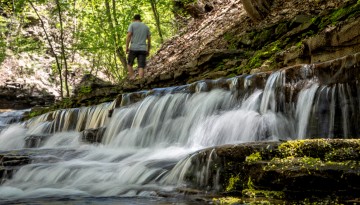
Resources abound – on Cornell’s Gorge Safety website, on signs along the Botanic Gardens’ trails and through the work of the gorge stewards – to help visitors safely explore and enjoy Cornell Botanic Gardens’ Natural Areas.
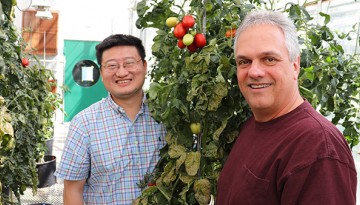
Researchers from Boyce Thompson Institute have collected the genome sequences of 725 different wild tomato types to create a pangenome, which will help breeders develop better strains.
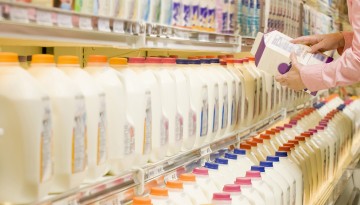
Cornell food scientists are designing the milk carton of the future that will give consumers precise “best by” dates and improve sustainability by reducing food waste.
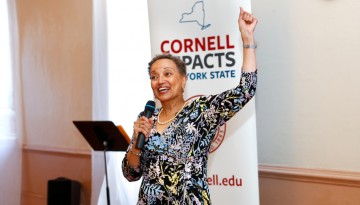
Jacqueline Davis-Manigaulte ’72, a senior extension associate, director of community relations, and the family and youth development program leader for Cornell University Cooperative Extension-NYC, is the latest recipient of the Cornell New York State Hometown Alumni Award.
Donald J. Lisk, M.S. ’54, Ph.D. ’56, professor emeritus of soil chemistry and toxicology and a champion of graduate education, died April 27. He was 88.