The Town of Dryden has been awarded a $1.5 million grant to help build a critical section of the 10.5-mile Dryden Rail Trail, including a proposed pedestrian bridge over Route 13, linking the proposed rail trail with Cornell Botanic Garden Natural Areas.
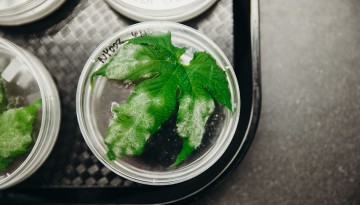
Thanks to research led by Cornell AgriTech’s David Gadoury, farmers may no longer have to rely on fungicides to control powdery mildew, a rampant plant fungal disease.
A collaboration between five colleges and a provost’s office investment of $2 million has led to a major revitalization of Cornell’s capabilities in flow cytometry, a vital part of cell research.
The Internet-First University Press has released a complete directory of all available material as it works to make new and archival content more easily accessible.
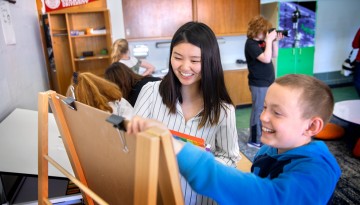
Cornell undergraduates redesigned a Groton auxiliary classroom to inspire and support older elementary students in practicing intellectual, interpersonal and planetary responsibility.
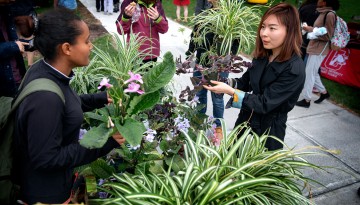
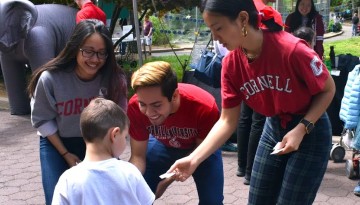
CALS Day took on a festival atmosphere with more than 35 science exhibits, food, animals, tie-dye and music during a celebration of the diversity of the college’s research and people.
Sugar glycation was shown to stiffen and alter the architecture of tissue and promote breast tumor cell movement, pointing to a possible mechanical link between diabetes and metastatic cancer.
Cornell students spent Earth Day outdoors at the Smithsonian’s National Zoo in Washington, D.C., teaching patrons how to mold plastic in a different way – by reduction.