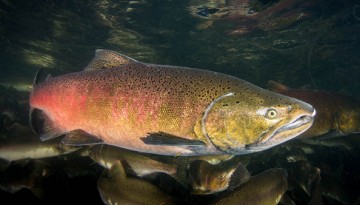
Advanced pop-off satellite tags developed by Cornell researchers and attached to the king salmon in Lake Ontario map the movements and feeding behavior in of the valuable fish.
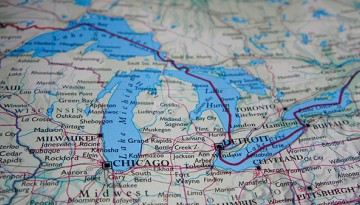
A regional consortium that includes Cornell is collaborating to preserve the Great Lakes thanks to a five-year, $20 million grant from the U.S. National Oceanic and Atmospheric Administration.
People with psychological distress are nearly 25 percent less likely to have a retirement savings account, according to financial economist Vicki Bogan. That means up to $42,000 less in savings for married couples.
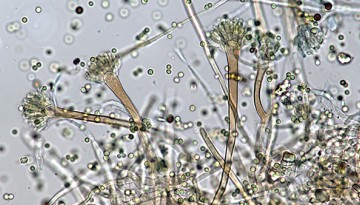
Cornell researchers, led by Ludmilla Aristilde, have found an agricultural conflict: negative consequences of the weed-killing herbicide glyphosate on Pseudomonas, a soil-friendly bacteria.
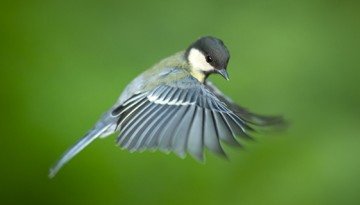
A new study considers whether the mass extinction that killed off the dinosaurs led to a temporary acceleration in the rate of genetic evolution among its avian survivors.
The Cornell Center for Materials Research JumpStart program, designed to help New York state small businesses develop and improve their products through university collaboration to grow revenue and create jobs, has funded 5 companies.
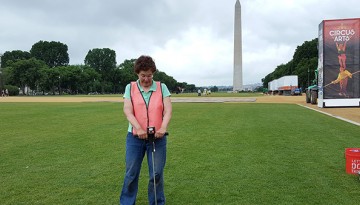
A team of Cornell scientists, led by Nina Bassuk, professor in the Horticulture Section of the School of Integrative Plant Science, is working to preserve the elms on the National Mall in Washington, D.C., for generations to come.
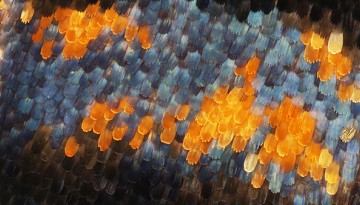
Two papers prove for the first time how single master genes – one for colors and iridescence and the other for stripe patterns – control these complex traits in butterfly wings.