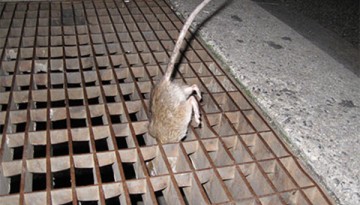
Rats in New York City were found to carry a flea species capable of transmitting plague pathogens, according to a new study from a team of researchers from Cornell and Columbia.
The sounds of the natural environment and their inspiration on composers like Olivier Messiaen – who used recordings from Cornell’s Lab of Ornithology – will be celebrated in a festival March 5-9.
More than 650 people from 25 countries attended Citizen Science 2015, the inaugural conference of the Citizen Science Association, on Feb. 11-12 in San Jose, California.
At a recent community showcase, undergraduates involved in the Biology Service Leaders program presented projects that ranged from testing water quality in local streams to teaching biology to people in prison.
To see if rural towns benefit from selling local farm products to urban consumers, the USDA awarded a $500,000 grant on Feb. 25 to a team of Cornell researchers led by economist Todd Schmit.
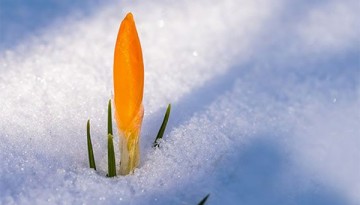
Thanks to a changing environment, trees and other plants experience advanced budding and blooming – or season creep. Toby Ault will discuss "springcasting" in a March 3 webinar.
By the end of this century, climate change will alter Oneida Lake enough to remove oxygen from its bottom waters, alter its species composition and eradicate its remaining cold water fish species.
Three Cornell assistant professors have received fellowships from the Alfred P. Sloan Foundation, whose goal is to support "the next generation of scientific leaders."
An undergraduate biology researcher describes for the first time how a small East Coast killifish jumps upright on land to see and navigate between tide pools - a possible clue into how sea creatures adapted to land.