With thousands of strategically placed cameras covering more than 27,000 square miles in central and western New York, Cornell biologists show that bobcat populations remain critically low.
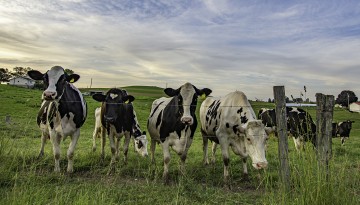
Research involving animal models – for purposes such as developing new vaccines or regenerative medicines – generally employ mice, but new Cornell research has identified another species that could be valuable in this type of work.
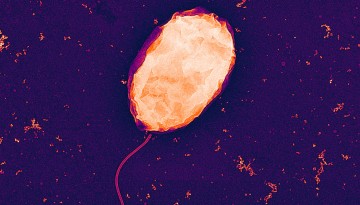
To conduct low-cost and scalable synthetic biological experiments, Cornell researchers have created a new version of a microbe to compete economically with E. coli – a bacteria used to synthesize proteins.
The U.S. National Science Foundation has awarded the Cornell High Energy Synchrotron Source $20 million to build a new precision X-ray beamline for research on biological and environmental systems.
Genetics, genomics and development alumna Nora Brown, Ph.D. ’23, was selected as a finalist for the SUNY Chancellor Ph.D. Graduate Dissertation Awards, which recognize outstanding doctoral candidates in the SUNY system.
Convening of 80 leaders, researchers and staff across six colleges discussed strategies to address climate change mitigation, adaptation and societal transformation, in a Feb. 1 roundtable sponsored by The 2030 Project.
Kersten, Ph.D. ’97, an experienced molecular nutrition researcher and academic leader, comes to Cornell from Wageningen University in the Netherlands, where he was most recently professor and chair of the Division of Human Nutrition and Health.