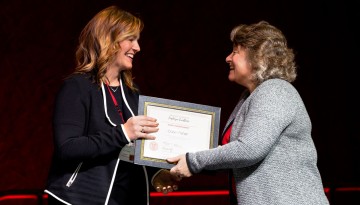
Seventeen individuals and three teams of Cornell employees received President's Awards for Employee Excellence in seven categories, highlighting the achievements of staff and faculty who excel in their roles.
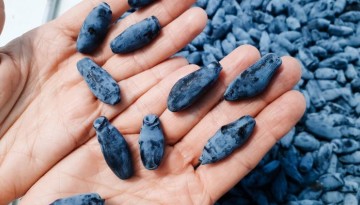
Resilient “superfruits” could benefit New York growers by diversifying their crops with native berries and appeal to consumers by offering nutritious new fruit choices.
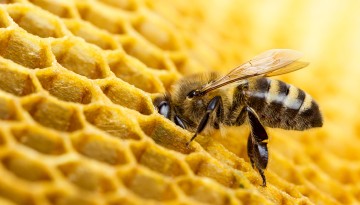
An analysis of beeswax in managed honeybee hives in New York finds a wide variety of pesticide, herbicide and fungicide residues, exposing current and future generations of bees to long-term toxicity.
Precollege’s most popular Winter Session course is Green World, Blue Planet (PLBIO 2400), taught by Tom Silva, winner of a SUNY Chancellor’s Award for Excellence for teaching. This three-credit online class begins Jan. 2.
For its work supporting international scholars whose work puts them at risk in their home countries, Cornell has been awarded the Institute of International Education’s Centennial Medal. It was presented to Provost Michael I. Kotlikoff on Oct. 30.
Twenty-five faculty and academic staff from nine Cornell colleges and units are Engaged Faculty Fellows for the 2023-24 academic year, with projects dedicated to advancing community-engaged learning at Cornell and within their respective fields.
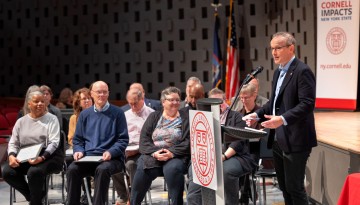
To underscore how local partnerships improve Cornell, Ithaca and Tompkins County, the university presented the 13th annual Cornell Town-Gown Awards to three student-community collaborations.
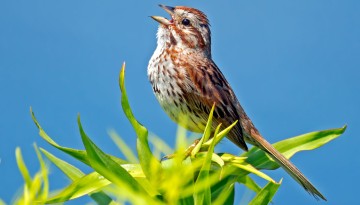
North American song sparrows may be more resilient to climate change thanks to a remarkable adaptation: a stunning range of body sizes found throughout the bird’s westernmost range.