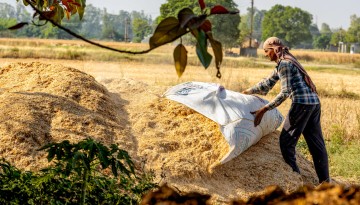
New maps, made from a global dataset of crop residues, reveal areas where biochar may be sustainably produced, offering a path to lowering atmospheric carbon dioxide, a greenhouse gas.
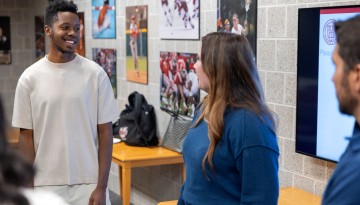
In a new Cornell Law School practicum and pilot program funded by the NCAA, students give athletes the skills to manage their finances while in school and when they graduate.
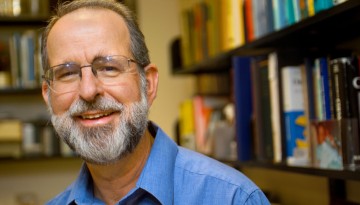
Frank DiSalvo, a chemist-physicist who inspired hundreds of Cornellians from different disciplines to collaborate on environmental and sustainability problems, died on Oct. 27 in Atlanta, Georgia. He was 79.
Students were tasked with addressing one of four challenges: creating new dairy products, coming up with more efficient food manufacturing processes, lessening the problem of food waste or creating products to increase knowledge and the use of honey and other bee-pollinated products.
Research on the role of hope in community work, online support groups and moderating online communities received awards at the 2023 Conference on Computer-Supported Cooperative Work And Social Computing.
A new paper shows that promised yield increases at a global scale from increasing organic carbon in soils would be negligible with current technologies and optimal management practices.
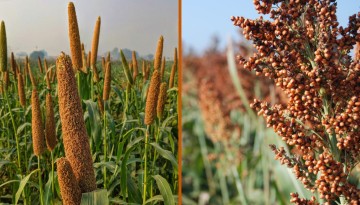
Cornell researchers are partnering on the newly announced Feed the Future Climate Resilient Cereals Innovation Lab (CRCIL), providing plant breeding expertise and powerful computational tools to increase the accessibility of cereal crops for those most vulnerable to hunger and malnutrition.