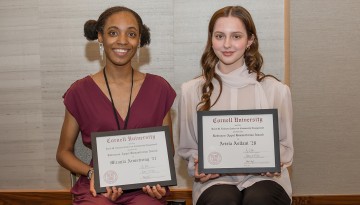
At a luncheon on May 21, 42 Merrill Scholars celebrated the mentors who had the greatest influence on their early education and the Cornell faculty or staff members who contributed most significantly to their college experience.
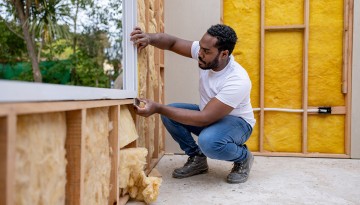
Housing is a basic human need that many struggle to afford because of limited incomes and increasing costs. This semester at Cornell in Rome, students and instructors across several classes explored different approaches to addressing the issue on display in Italy.
Featuring a “hanging” auditorium, commons area and program facilities, the adaptive reuse project celebrates the 1902 building's historic elements while giving it new life within the College of Architecture, Art and Planning.
Cornell faculty and husband-and-wife creative team Mendi and Keith Obadike have worked for decades across music, text, and visual art to explore complex histories and social tensions. The resulting pieces invite the audience into a conversation with both the artists and their material.
Led by College of Architecture, Art and Planning experts, “Embodying Justice in the Built Environment: Circularity in Practice” seeks to help communities center justice principles while implementing sustainability strategies.
Three Cornell undergraduates received Robinson-Appel Humanitarian Awards to honor their significant involvement in community engagement. Ariela Asllani ’26, David Ni’ 24 and Melody Welles ’27 each received a $2,500 prize towards projects that improve the lives of diverse local populations, including adopted and foster children, refugee students, and immigrants.
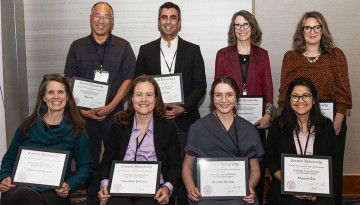
Thirteen Cornell faculty members have received Community-Engaged Practice and Innovation Awards from the Einhorn Center for Community Engagement. The awards recognize faculty who have recently developed community-engaged learning, leadership or research activities that create opportunities for students.
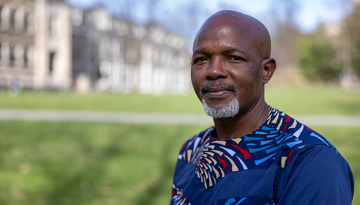
This April, the Cornell Mui Ho Center for Cities welcomes Joseph Kimani, Executive Director of Slum Dwellers International–Kenya, to campus to share conversation and learning as both organizations seek to support informal settlement residents in their efforts to achieve increased housing security and equitable access to urban services.