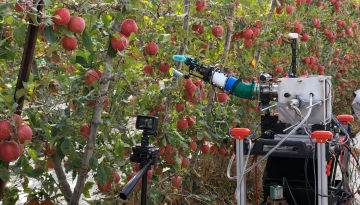
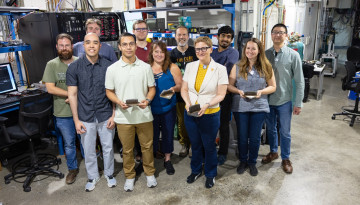
A Cornell-led research project is developing robots that can perform labor-intensive orchard operations; it’s supported by a four-year, $7.5 million grant from the U.S. Department of Agriculture’s Specialty Crop Research Initiative.
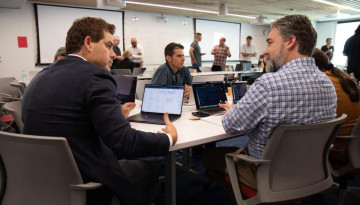
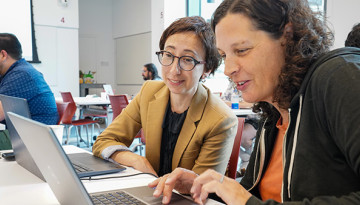
Thirty participants from 23 units across eight colleges gathered in early August to explore what an AI-enabled future of software development might look like at Cornell. They expected to share tools, compare approaches, and test new ideas. Instead, many left talking about something else entirely: people.
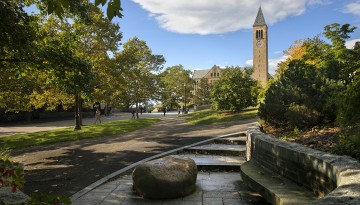
Cornell’s To Do the Greatest Good campaign surpassed its goal of raising more than $5 billion and engaging more than 200,000 alumni – achievements that will enhance opportunities for students and accelerate critical faculty research.
Seven Cornell research teams have received Center for Advanced Technology grants to advance early-stage life science technologies through collaborations with biotechnology companies across New York state.
This summer, 60 undergraduates participated in the Bowers Undergraduate Research Experience, a 10-week, paid program where undergraduate students do real-world research alongside Bowers faculty.
The AI sector is not in a bubble market, but the prices of some individual AI companies behave with the price variability and exuberance characteristic of a bubble, according to new Cornell research.
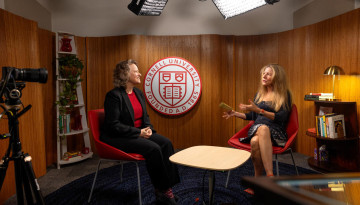
The second season of Research Matters, a Cornell video podcast, drops today, with a way-too-relevant episode on why we don't always do the things we know we should.
“We Do AI” was the first educational series at Cornell to provide staff across an entire college with advanced training in how to use AI effectively in their daily workflows.