A collaboration including Cornell astrophysicists has found the first evidence of low-frequency gravitational waves believed to be generated by merging pairs of supermassive black holes.
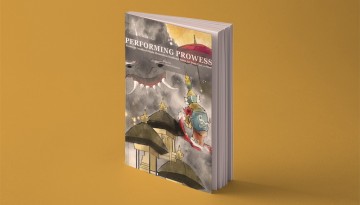
Featuring an introduction by professor Kaja McGowan and essays by Cornell alumni and current doctoral candidates, "Performing Prowess" traces the ways cultural forces of Hindu belief have persisted in Southeast Asia
The “widowhood effect” – the tendency for married people to die in close succession – is accelerated when spouses don’t know each other’s friends well, new Cornell sociology research finds.
“Campfire,” an original short film by Associate Professor Austin Bunn, won the Provincetown International Film Festival’s "best queer short" award, making it eligible for an Academy Award nomination.
“Empires of Complaints: Mughal Law and the Making of British India, 1765-1793” by Robert Travers won honorable mention from the Law and Society Association's James Willard Hurst Book Prize.
In new research, Andrew Campana examines cinema-centered poetry in Japan from the 1910s and 1920s, discovering the ways poetry chronicles lasting human impressions left by “new” media.
Appointed to the Cary and Ann Maguire Chair in Ethics and American History this year, Tamika Nunley is using her time at the Library of Congress to work on The Black Reproductive Justice Archive, a collection of oral histories.
A recently discovered exoplanet may provide insights about conditions at the inner edge of a star’s habitable zone, and why Earth and Venus developed so differently, according to new astronomy research led by Lisa Kaltenegger.