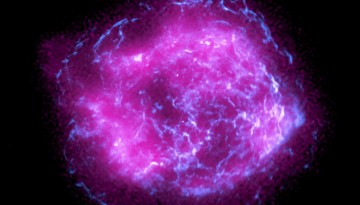
Quantum electrodynamics can explain the puzzling first observations of polarized X-rays emitted by a neutron star with a powerful magnetic field, according to a Cornell astrophysicist.
Johannes Lehmann, Colin Parrish, Bik-Kwoon Tye and Michelle Wang are Cornell’s 2023 electees to the National Academy of Sciences (NAS), the academy announced May 2 at the close of its 160th annual meeting.
New grants from the Cornell Center for Social Sciences (CCSS) will fund research ranging from exploring why people spread polarizing content online to assessing health care access in rural New York.
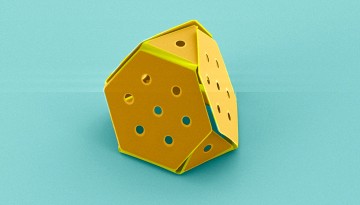
A Cornell-led collaboration harnessed chemical reactions to make microscale origami machines self-fold – freeing them from the liquids in which they usually function, so they can operate in dry environments and at room temperature.
Cornell researchers have for the first time characterized a key property of the superconducting state of a class of atomically thin materials that are too difficult to measure due to their minuscule size.
Increasing women’s representation in science, technology, engineering and math majors will reduce – but not nearly eliminate – gender disparities in STEM occupations, new Cornell sociology research finds.
To make textiles more sustainable, a new method allows researchers to break old clothing down chemically and reuse polyester compounds to create fire resistant, anti-bacterial or wrinkle-free coatings that could then be applied to clothes and fabrics.
In her new book, historian Tamika Nunley explores the personal stories of Black women and girls who struggled against enslavement and the limited justice that was available to them in early Virginia.