Events this week include film screenings and talks with “American Psycho” screenwriter Guinevere Turner; a reading by M. Evelina Galang; and Irish band Lúnasa as part of the Cornell Concert Series.
Forty years after astronomer Carl Sagan helped people explore space through his “Cosmos” television series, a new season of scientific adventures will air on the National Geographic Channel, beginning March 9.
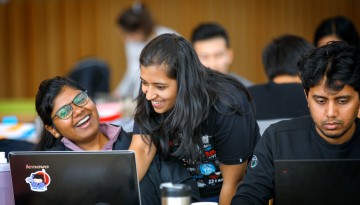
Students in fields ranging from computer science and engineering to business, agriculture and animal science convened at the second Digital Agriculture Hackathon, Feb. 28-March 1, with a shared purpose: to combine their disparate skills to brainstorm ways to make the world a better place.
Researchers from Cornell and the Mars Global Food Safety Center can complete whole-genome sequencing to determine salmonella serotypes in two hours and the whole identification process within eight hours.
NYSERDA will give Cornell $1.65 million in incentives for energy studies and project work to develop a smaller carbon footprint for campus, toward the university’s net-zero carbon goal by 2035.
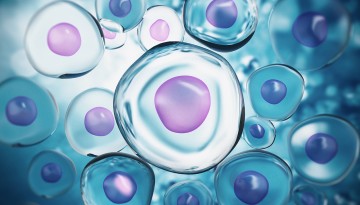
In recent years, researchers in the lab of Hening Lin discovered enzymes that remove chemical modifications – “codes” used for cell signaling – from proteins.
Recyclable plastic containers with the No. 2 designation could become even more popular for manufacturers as plastic milk jugs, dish soap and shampoo bottles may soon get an environmental makeover.
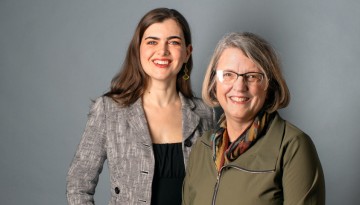
Caitlín Barrett and Kathryn Gleason ’79 have been collaborating since 2016 on the excavation and survey of a large house and garden site, the Casa della Regina Carolina Project, at Pompeii in southern Italy.