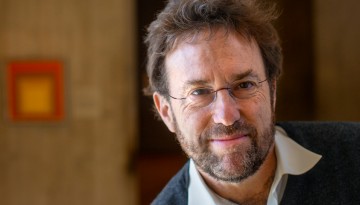
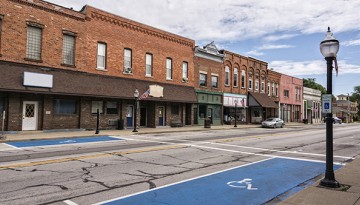
A new book by Cornell historian Lawrence Glickman traces how the term “free enterprise” evolved from a contested keyword in American politics to a cornerstone of conservative philosophy.
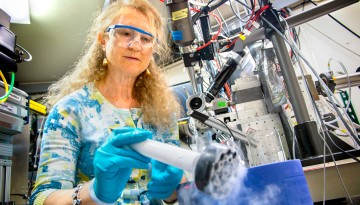
The NIH has awarded Cornell $17.4 million for Macromolecular X-ray science at the Cornell High Energy Synchrotron Source, a subfacility of CHESS specializing in biomedical research.
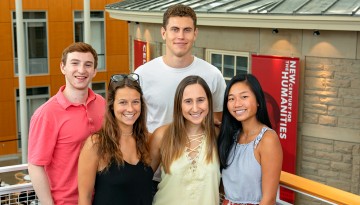
Nine student teams stayed in Ithaca this summer to continue working on their business ideas, in areas such as machine learning and solar energy, through the Life Changing Labs summer incubator.
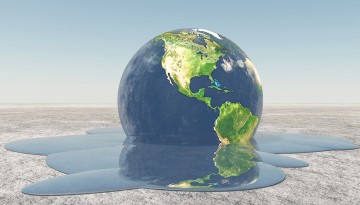
As methane concentrations increase in the Earth’s atmosphere, chemical fingerprints point to a probable source: shale oil and gas, according to new Cornell research published in Biogeosciences.
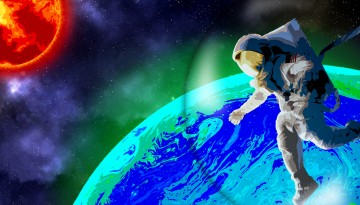
Astronomers seeking life on distant planets may want to go for the glow. Harsh ultraviolet radiation flares from red suns, once thought to destroy surface life, might help uncover hidden biospheres.
Mildred Warner, M.S. ’85, Ph.D. ’97, professor of city and regional planning, has secured a $500,000 grant from the USDA to extend her work on multigenerational planning in rural areas.
Nobel Prize-winning author and alumna Toni Morrison, M.A. ’55, who was also an A.D. White Professor-at-Large at Cornell from 1997 to 2003, died Monday, Aug. 5, in New York City. She was 88.
The ILR Buffalo Co-Lab instituted a new program this summer called Working on Democracy: Buffalo Summer Fellowships with NYS Legislators, in which three undergraduates worked on projects with state lawmakers.
Tweets believed to be written by African Americans are much more likely to be tagged as hate speech than tweets associated with whites, according to a Cornell study analyzing five collections of Twitter data marked for abusive language.