Scientists have long suspected that rapid evolutionary change in fish is caused by intense harvest pressure. Now, for the first time, scientists have unraveled the genomic changes that caused it.
Gregory Fuchs, associate professor of applied and engineering physics, has been awarded a three-year grant to develop his pioneering technique for observing tiny magnetic structures, and to apply the technique to explore their little-known properties.
Cornell mathematical physicist Andre LeClair, in research published in the Journal of Statistical Mechanics: Theory and Experiment, offers a possible path to a solution of the Riemann hypothesis, one of the seven Millennium Prize Problems.
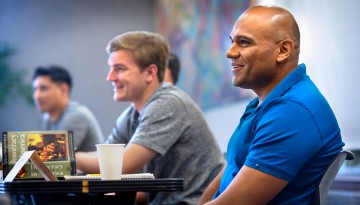
The Warrior-Scholar Project, an academic boot camp and immersive college prep experience, brought 13 current and former enlisted service members to campus July 20-28.
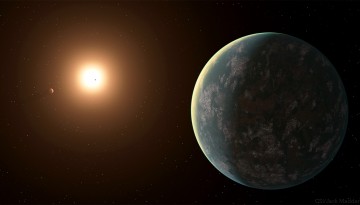
An international team of astronomers led by Cornell’s Lisa Kaltenegger has characterized the first potentially habitable world outside of our own solar system.
Academy Award-nominated screenwriter Andrea Berloff ’95 makes her directing debut with “The Kitchen,” starring Melissa McCarthy, Tiffany Haddish and Elizabeth Moss; it comes to theaters Aug. 9.
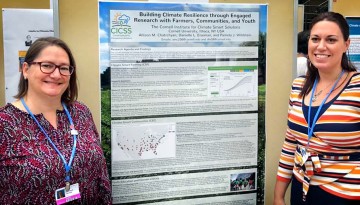
A Cornell researcher is collaborating to help Scotland achieve net zero carbon emissions by 2045 through education to support new, stronger climate-action policies.
A new study co-authored by Kelly Zamudio, professor of ecology and evolutionary biology, shows that increasing class size has the largest negative impact on female participation in STEM classrooms.