Panel presents promise, peril of AI use in education at Cornell

The panel, “AI + Education: Teaching and Learning in the Age of AI,” held during the 75th Trustee-Council Annual Meeting, painted a complete picture of the state of AI in education at Cornell.

Around Cornell

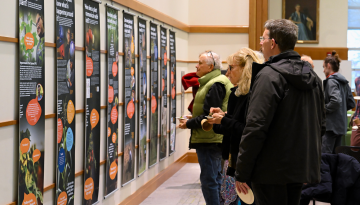
Commemorating composer, pianist, pedagogue Louise Farrenc Nov. 14-15

The two-day event features performances of Farrenc’s chamber music on historical instruments, a reimagining of the salon culture in collaboration with the Johnson Museum of Art, and scholarly presentations. 

Around Cornell

Alumni gift endows director position for Jewish Studies Program

The $5 million gift from Joseph Lubeck ’78 gives the Jewish Studies Program foundational support for the future.

Around Cornell

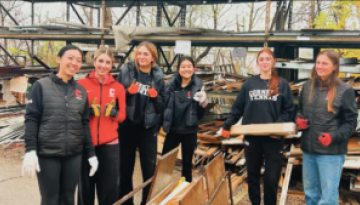
Food Hackathon students turn their ideas into delicious reality

Entrepreneurial Cornell students compete in the annual food hackathon, but then what? Their prototypes gain new ways to become reality.

Medical anthropologist to deliver annual Society for Humanities lecture

Stacey Langwick, associate professor of anthropology in the College of Arts & Sciences, will speaking on "Healing in a Toxic World: Reimagining the Times and Spaces of the Therapeutic." 

Around Cornell

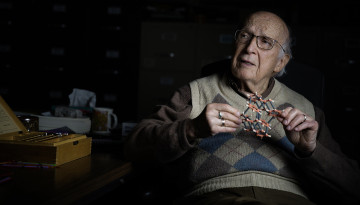
Nathan Seiberg explores frontiers of physics in 2025 Bethe Lecture

Seiberg, professor in the School of Natural Sciences at the Institute for Advanced Study, will explore string theory and other aspects of scientific progress

Around Cornell

The do-gooder dilemma: to disclose or not to disclose

People say they would feel worse telling others about their charitable acts than if they kept the news to themselves, or told others about their personal achievements, the study found. 

Neural implant smaller than salt grain wirelessly tracks brain

Cornell researchers and collaborators have developed a neural implant so small that it can rest on a grain of salt, yet it can wirelessly transmit brain activity data in a living animal for more than a year.

Startup bets their superfast microbe can rewrite biotech 

Researchers develop a new bacterium that can absorb DNA directly from its surroundings and incorporate it into its own genetic code.