On April 24, Cornell students can join this London-based artist at a virtual collage-making workshop and discussion about creativity, mental health, and representations of Black women in art.
Parham’s Digital Humanities Lecture, set to take place online April 28, will discuss what might be made possible at the intersection between Black expressive traditions, digital humanities, and electronic literature, with an eye to describing the chain of interactions that link theory to practice.
In a new critical edition of three plays by Githa Sowerby (1876-1970) J. Ellen Gainor argues for the lasting merit of this writer's artistry and for recognition of women in theater.
In her new book, Riche Richardson examines iconic Black women leaders who have contested racial stereotypes and constructed new national narratives of Black womanhood in the United States.
How and why Afro-Asian Jews in Israel became associated and engaged with Global Black thought throughout the 20th century will be explored in a virtual talk by Professor Bryan K. Roby on May 6.
The Andrew W. Mellon Foundation has approved a grant of $1.2 million to extend the Mellon Collaborative Studies in Architecture, Urbanism and the Humanities interdisciplinary seminar series at Cornell for three years with a focus on social justice.
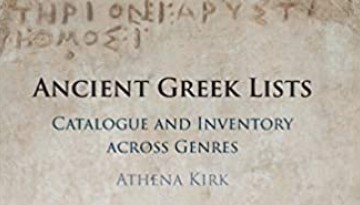
Athena Kirk's new book, “Ancient Greek Lists: Catalogue and Inventory Across Genres,” argues that the list form was the ancient mode of expressing value through text, examining the ways in which lists can “stand in for objects, create value, act as methods of control, and approximate the infinite.”
Four science journalists leading the way in coverage of the COVID-19 pandemic will discuss their experiences in an upcoming College of Arts & Sciences virtual event April 28.