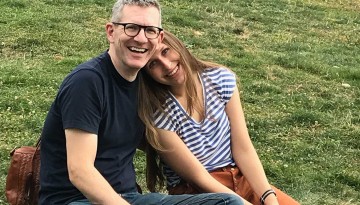
Amy Crouch ’22, a linguistics major in the College of Arts and Sciences, recently released her first book, “My Tech-Wise Life: Growing Up and Making Choices in a World of Devices,” written with her dad, author Andy Crouch ’89.
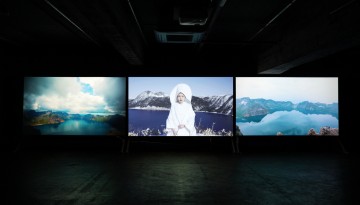
Artist Soni Kum joins the Einaudi Center's East Asia Program on April 2 at 10:00 a.m. to discuss her latest installation work, Morning Dew: The Stigma of Being “Brainwashed.”
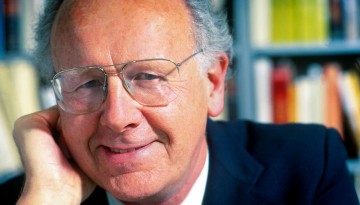
Tom Pepinsky, a Tisch University Professor in government, will be the inaugural Walter F. LaFeber Professor. The professorship was created thanks to a gift from Andrew H. Tisch ’71 and Ann Rubenstein Tisch.
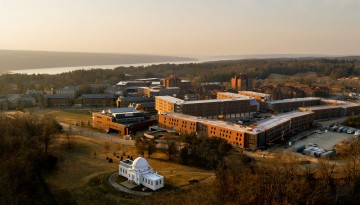
Cornell will honor Nobel Prize winner Barbara McClintock, renowned Chinese scholar Hu Shih and the Cayuga Nation with names for new North Campus residence hall buildings.
An original solo performance, “spit fire, drink gasoline (repeat),” created and presented by Levi Wilson ’21, will have its YouTube premiere on March 25 at 7:30 p.m., available to view anytime until April 25. The event includes a Q&A with internationally acclaimed performance artist Tim Miller.
Michael Fontaine’s lively new translation of Cicero’s ancient text on humor, “How to Tell a Joke: An Ancient Guide to the Art of Humor,” amuses as well as instructs – as Cicero no doubt intended.
“Shtisel,” an Israeli television series about a family living in an ultra-Orthodox neighborhood in Jerusalem, is an international hit on Netflix. Its director and writer, Yehonathan Indursky, will talk about the series during “The Making of Shtisel,” an online event hosted by Cornell’s Jewish Studies Program on March 24.