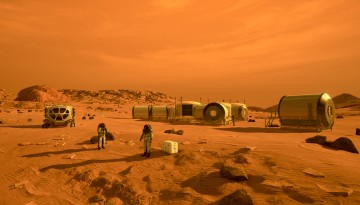
Can humans endure long-term living far from our home planet? Maybe, according to a new theory that describes the need for gravity, oxygen, obtaining water, developing agriculture and handling waste.
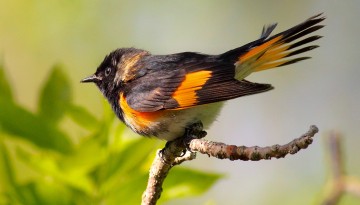
A new study demonstrates that birds can partially compensate for deteriorating habitat conditions by delaying the start of spring migration and completing the journey faster – but the strategy comes with a decline in overall survival.
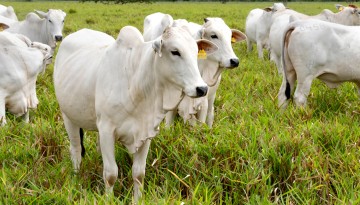
The Bezos Earth Fund grant will support a project developing low-cost virtual livestock fencing that would benefit farmers and animals, improve public health in developing countries and combat climate change.
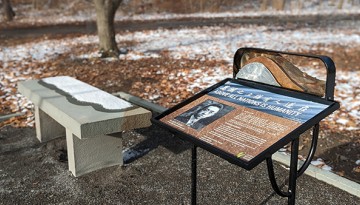
While a student at Cornell, Hu Shih 1914 imagined and later led a literary movement resulting in the adoption of a common, accessible language in China. The language reforms that emerged with Hu Shih at Cornell went on to change an entire nation. A stone bench and interpretive sign invite community members to the northwest corner of Beebe Lake, where they can learn more about Hu Shih.
A Cornell multidisciplinary research center that studies chronic fatigue syndrome has received a five-year, $9.5 million grant from the National Institutes of Health – funding that will enable experts to continue work on the mysterious and debilitating condition.
Ten Graduate School doctoral candidates, joined by one student from the Weill Cornell Graduate School of Medicine, traveled from Ithaca and New York City to Capitol Hill for Cornell Ph.D. Student Advocacy Day on March 29.
Jerome Van Buren ’50, M.S. ’51, Ph.D. ’54, whose work to preserve the nutritional quality of foods benefited growers and consumers in New York and around the world, died Jan. 12 in Ithaca. He was 96.
Cornell CALS’ Nutrient Management Spear Program (NMSP) is collaborating with research institutions and dairy farms across the U.S. to help the dairy industry move toward greenhouse gas reductions while improving soil health and climate resiliency of forage production.