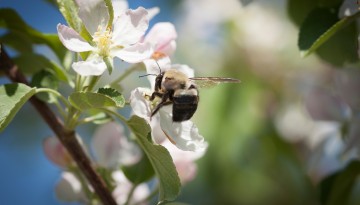
For the first time, Honey Bees: Their Intriguing Biology and Interactions with Humans (ENTOM 2030) will be offered during Summer Session 2023.This online course, taught by Dr. Marina Caillaud, a lecturer in the Department of Entomology, will examine the lives of bees, their contribution to humanity through the ages, as well as the threats they are currently facing.
A new special issue of the Proceedings of the National Academy of Sciences, co-edited by Cornell economist Catherine Kling, advances the science of measuring the public benefit of clean water.
As the world population grows and climate change threatens agriculture and global food systems, researchers across Cornell CALS are reimagining agri-food systems for the 21st century.
A Cornell-led project used ancient DNA extraction and analysis to reconstruct the phenotype of the renowned sled dog Balto, revealing his lineage was genetically healthier and less inbred than modern breeds.
In a review of more than three decades’ worth of studies a Cornell-led research group found that more research on messaging that includes the voices of historically marginalized people is necessary in the push toward equity.
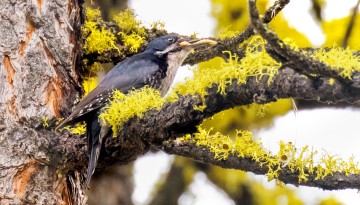
Scientists have created a tool based on the habitat preferences of the black-backed woodpecker to help forest managers make decisions that promote regrowth and biodiversity following wildfires.
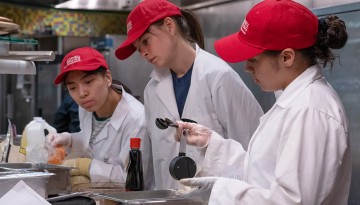
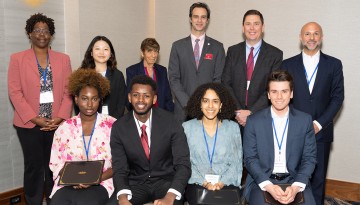
A diverse group of students and recent graduates representing Cornell’s four contract colleges has been selected to receive the 2023 State University of New York Chancellor’s Award for Student Excellence.
Najeh Abduljalil ’25, Alisha Robbins ’26, Yasmin Ballew ’23 and Michael Dicpinigaitis ’24 were recognized for creating opportunities and improving access for youth from Tompkins County and the surrounding region.