Wilmot “Bill” Irish, an agricultural engineer and professor emeritus, who specialized in farm structures and mechanization in the dairy and poultry industries, died Nov. 22, 2022, in Shelburne, Vermont. He was 94.
Ten Cornell postdoctoral researchers who plan to harness the power of artificial intelligence (AI) in areas like materials discovery, physics, biological sciences and sustainability sciences have been named Eric and Wendy Schmidt AI in Science Postdoctoral Fellows, a Schmidt Futures program.
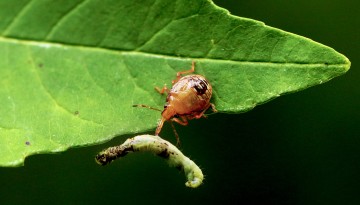
Moderate levels of artificial light at night – like the fixture illuminating your backyard – bring more caterpillar predators and reduce the chance that these lepidoptera larvae grow up to become moths.
Students from Cornell and other universities are invited to enroll now for Cornell’s Summer Session, which will feature on-campus, online and off-campus courses. Students can earn up to 15 credits taking regular Cornell courses.
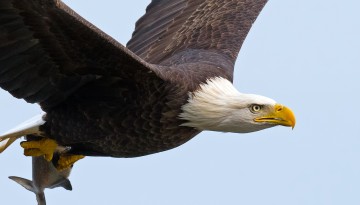
As they seek new foods because climate change has altered their traditional diet of salmon carcasses, bald eagles in northwestern Washington state have become a boon to dairy farmers, deterring pests and removing animal carcasses from their farms, a new study finds.
The program seeks to nurture the careers of Cornell’s most promising faculty members in the social sciences by providing time and space for high-impact social scientific scholarship.
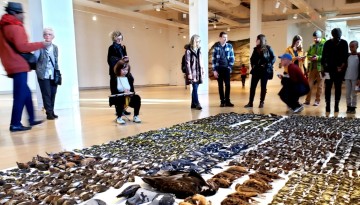
Citizen science has enabled much of the progress in understanding the scope of bird deaths from building and window collisions, according to a new study.
Rosemary Caffarella, a former professor of education at Cornell whose inclusive approach to adult and continuing education helped transform her field, died Dec. 30, 2022, in Ithaca. She was 76.