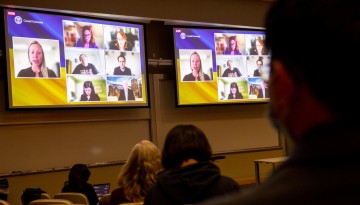
Faculty experts and Ukrainian students will speak about how the Russian invasion of Ukraine threatens lives, the post–Cold War international order and the stability of the global economy at an event March 17 at 4:30 p.m.
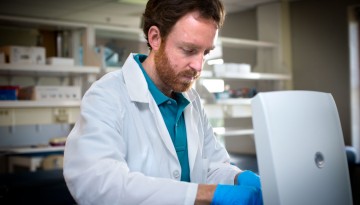
A new Cornell study sheds light on a controversial debate in epigenetics – the set of molecular changes occurring on top of the genome that regulate how genes are turned on and off, but without changing a cell’s DNA sequence.
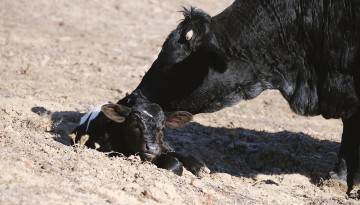
Globally, by the end of this century low-income cattle farmers in poor countries may face financial loss between $15 to $40 billion annually, due to looming climate change.
A new 3D-printable mask design, inspired by animal noses, promises easy breathing for users while maintaining similar levels of protection against pathogens found in N95 and surgical masks.
USDA Under Secretary for Rural Development Xochitl Torres Small met with members of the Cornell community to discuss critical challenges facing rural areas such as climate change, food supply chain instability and access to resources.
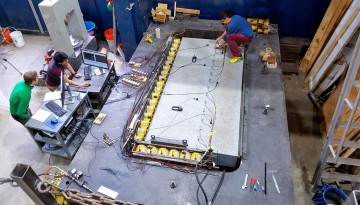
By examining earthquakes in a fresh way, a modeling revelation discovered in the lab by Cornell engineers helps science inch closer to accurate quake forecasts.
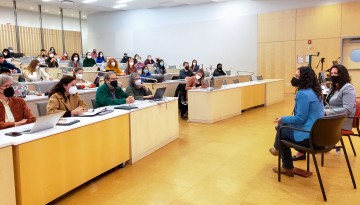
Clarity about the goals of sanctions against Russia will be key to attempts to de-escalate the conflict, Cornell faculty experts said during a March 4 panel discussion.
Cornell CALS Professor Emeritus Norman Scott and his wife, Sharon, have endowed a professorship that will support transdisciplinary, innovative research and teaching in food, agriculture and life sciences.
Four new studies explore lessons learned from the first five years of the Gender-responsive Researchers Equipped for Agricultural Transformation (GREAT) project.