Eleven assistant or associate professors representing four colleges have recently received National Science Foundation Faculty Early Career Development Awards to support their research objectives.
With the potential to cause large financial losses to the U.S. poultry industry, Highly Pathogenic Avian Influenza (HPAI) has re-emerged in New York state. CCE poultry specialists are asking poultry producers to keep an eye out.
Ukrainian students and researchers share thoughts about their loved ones’ safety and their country’s future as they absorb the ongoing news of Russia’s invasion of Ukraine.
Cornell researchers have created the most advanced virtual reality urban farm tour ever made, an online learning experience that promises to transport urban and rural farmers to New York City’s Red Hook Farms without ever leaving home.
In a global cautionary tale, the UN’s IPCC has a new climate change report written by Cornell’s Rachel Bezner Kerr and 270 others, to pull our planet from dire environmental ruin.
The Donna and Dennis Lowe Scholarship will support CALS undergraduates with financial need as part of the university’s To Do the Greatest Good capital campaign.
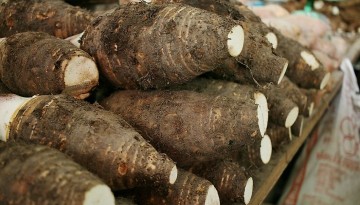
Researchers in Nigeria are on a mission to upend taro leaf blight (TLB) epidemics across West Africa. The infectious plant disease attacks the leaves of taro, which has historically reduced taro yields by up to 50% and leaf yield losses of up to 95%.
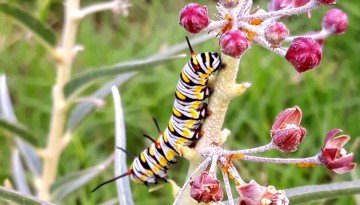
Researchers have identified a species of milkweed that holds promise for planting on roadsides to improve conservation habitat for migrating monarch butterflies.
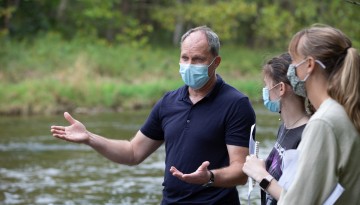
Instructors Marc Goebel and Kira Treibergs work to ensure that students in Introductory Field Biology (NTRES 2100) have a collaborative learning experience. Student teams build confidence through collaborating on field research and learning to read the landscape.