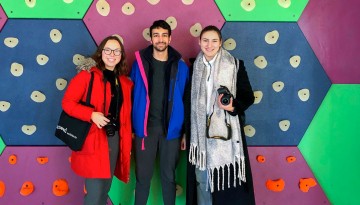
Thirty-five outstanding seniors were recognized as 2020 Merrill Presidential Scholars, an honor they share with the teachers and professors who inspired them and contributed to their academic development.
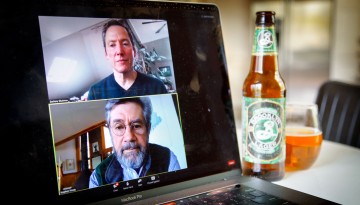
Steve Hindy ’71, MAT ’73, Cornell's 2020 Entrepreneur of the Year, shared stories about his career as the co-founder of Brooklyn Brewery during “Beer and Business,” a virtual discussion and beer tasting hosted May 19 by Entrepreneurship at Cornell.
When biology major Brian Lee started Cornell in August 2016, he did not realize he wanted to research cancer and study medicine. With thanks to his mentor, he will.
Cornell researchers have sequenced and analyzed the genome of a single-celled alga that belongs to the closest lineage to terrestrial plants and provides many clues to how aquatic plants first colonized land.
A week before Cornell's campus shut down due to the COVID-19 pandemic, members of an engineering student group converted a university-owned diesel tractor into a clean, green farming machine.
The average American adult is exposed to nearly 600 alcohol ads on TV each year, and more exposure is linked to higher levels of drinking, according to a Cornell study.
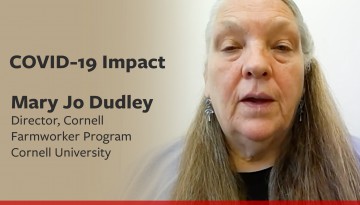
Mary Jo Dudley, an expert in farmworker issues, talks about how the pandemic has underlined the importance of farmworkers, who are crucial to maintaining the country’s food supply.