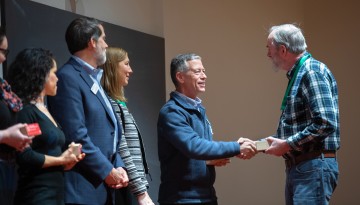
More than 200 attendees at Cornell’s Sustainability Leadership Summit heard how New York may be a leader in creating renewable energy and learned about the university’s own sustainability progress.
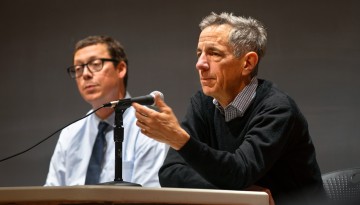
After hosting nearly 20 listening sessions, a faculty committee exploring how best to elevate public policy at Cornell plans to submit its final report in January.
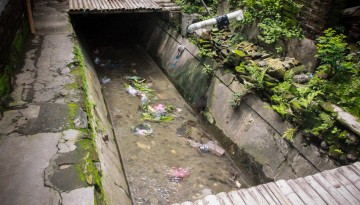
Cities in the “global south” – densely populated urban areas that are part of low-income countries in Asia, Africa and Latin America – should phase out pit latrines, septic tanks and other on-site methods of human waste management, according to a Cornell researcher.
Cornell geologists, examining the desolate Vavilov ice cap on the northern fringe of Siberia in the Arctic Circle, have for the first time observed the rapid ice loss from an improbable new river of ice.
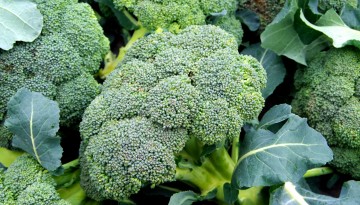
In tests, consumers in upstate New York were willing to pay more for broccoli grown in New York when they knew where it came from, Cornell researchers found.
Staff and student participants in the Community Learning and Service Partnership program attended a Dec. 12 luncheon in Warren Hall for a “midyear celebration of learning.”
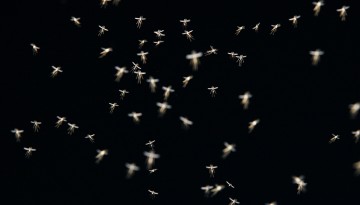
Four Cornell researchers took a deeper look at mosquito reproduction with the goal of helping humans combat outbreaks of diseases such as dengue and Zika, which are worsening as the climate warms.
Events at Cornell this week and through the winter break include student film screenings, winter solstice celebrations, the Cornell Concerto Competition and Winter Employee Celebration.