Startup Zymtronix – an industrial biotech company housed in Cornell’s McGovern Center – has been selected as a challenge finalist at the Hello Tomorrow 2020 global summit, March 11-13 in Paris.
Nearly 70 professionals from around the world have become Cornell Climate Online Fellows, as they take action locally to battle atmospheric greenhouse gas and ask others to join in.
Faculty and students from Cornell departments teaching design studios and design thinking will exchange ideas to foster connections between fields and strengthen pedagogy at the inaugural Design@Cornell Roundtable Feb. 14.
Professor of practice Jon McKenzie is helping area students see the possibilities in making media, from info comics to video, to tell stories about real issues in their lives and in their communities.
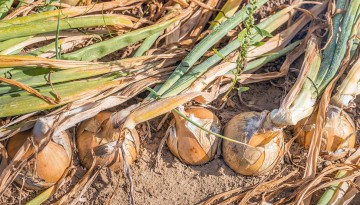
Cornell AgriTech researchers are tackling a form of onion leaf blight that recently has affected 75% of New York state onion crops, a $44.7 million industry.
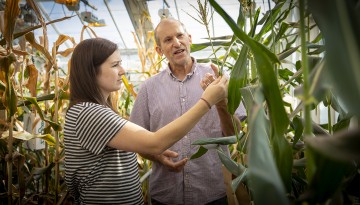
A group of researchers led by adjunct professor David Stern, president of the Boyce Thompson Institute, has developed a type of corn that is chill-resistant, which could increase growing area and productivity.
Undergraduates can now apply for the new Science Communication and Public Engagement minor, designed to prepare students to be socially engaged scientists who can clearly communicate their findings.
The state Capitol building in Albany was awash in Cornell red on Jan. 27 as state Senate and Assembly members welcomed more than 50 Cornell Cooperative Extension directors from across the state.
Cornell researchers have determined that a hemp plant’s propensity to “go hot” – become too high in THC – is determined by genetics, not as a stress response to growing conditions.