Cornell University researchers will collaborate on a new, five-year United States Agency for International Development flagship multi-sectoral project to combat malnutrition.
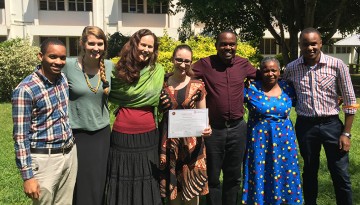
Jeanne Moseley, director of the Division of Nutritional Sciences’ Global Health Program, has been awarded the George D. Levy Faculty Award for her efforts to create exemplary, sustained community-engaged projects.
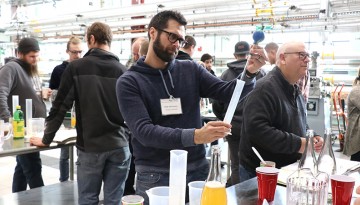
The Cider and Perry Production: Science & Practice course, held at Cornell AgriTech Dec. 3-7 drew hard cider producers from around the country to Geneva.
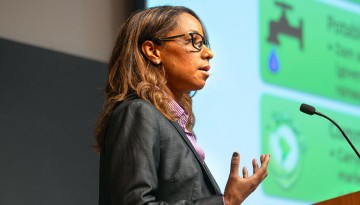
In this era of rising atmospheric temperatures, Shorna Allred discussed her concerns about preserving the world’s indigenous societies during her keynote address Dec. 6 at Cornell’s 2018 Sustainability Leadership Summit.
A new Cornell-led study shows that Midwest agriculture is increasingly vulnerable to climate change because of the region’s reliance on growing rain-fed crops.
Cornell Cooperative Extension's “Extension Out Loud” podcasts examine output, quality and consumer impacts from this year’s vegetable, tree fruit, grapes and field crops harvests.