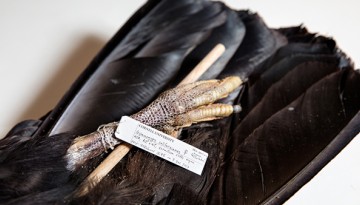
The Cornell Museum of Vertebrates now has three California condor specimens in its collection, thanks to a donation by the United States Fish and Wildlife Service.
An opening for "Quiet Labor," an exhibit featuring naturally dyed textiles, garments, and artworks by participants in the Cornell Natural Dye Studio, took place Feb. 7 at the Cornell Botanic Gardens Nevin Welcome Center and will run until June 25.
Peggy Stevens, administrative assistant in the Department of Biological and Environmental Engineering (BEE), has been nominated as a sustainability champion for engaging faculty, staff and students for input on and participation in increasing office sustainability practices in Riley Robb Hall.
At the Maplewood Apartments project, now under construction, Cornell engineering students will deploy heat-pump monitors to study the system viability in a severe winter climate.