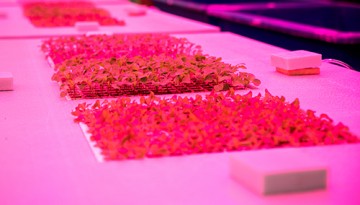
The Greenhouse Lighting and Systems Engineering consortium, announced June 5 and led by researchers at Cornell and Rensselaer Polytechnic Institute, will transform the way greenhouses operate to reduce electricity use for lighting by up to 70 percent.
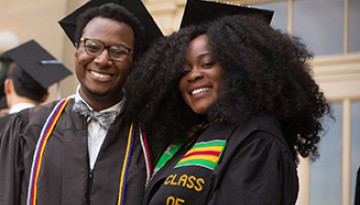
The inaugural class of Cornell SC Johnson College of Business graduated May 28, celebrating the achievement with family and friends who converged on Ithaca from around the globe.
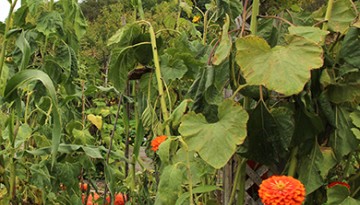
Cornell researchers and Haudenosaunee (Iroquois) growers discussed indigenous knowledge and traditional agricultural practices at a symposium at Cornell Botanic Gardens.
Solving a 140-year old taxonomic puzzle, Cornell researchers have identified and described a new species of electric fish from the Ogooué River in Gabon, Africa.
Harry Kaiser, associate dean for academic affairs of the Charles H. Dyson School of Applied Economics and Management, has been named a 2017 Agricultural and Applied Economics Association fellow.
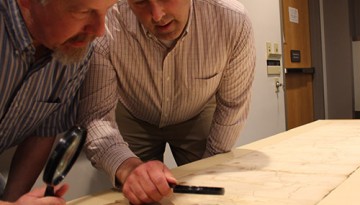
A newly acquired 18th-century map of what is now New York state, showing Seneca and Cayuga villages and native footpaths in addition to natural features, offers insights into colonial life.
Cornell Botanic Gardens has expanded the Palmer-Adams Preserve and its Bald Hill Natural Area with a gift of 31.1 acres on Bald Hill School Road in the town of Caroline, New York.