Business and academic leaders, entrepreneurs and students came to the first Women Redefining Entrepreneurship and Leadership Conference Feb. 6 on campus to connect, recruit, learn and be inspired.
Weill Cornell Medicine investigators have discovered a treatment-resistant prostate cancer that resembles small-cell lung cancer rather than typical prostate cancer and may suggest new treatments.
Weill Cornell Medicine, NewYork-Presbyterian and Houston Methodist have established a new collaborative fellowship program to create highly trained bioethicists.
The rebuilt Liberty Hyde Bailey Conservatory Greenhouse reopened Feb. 9 with modern equipment designed for increased energy savings and improved plant growth. It houses more than 500 species.
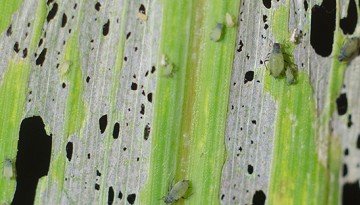
Researchers at the Cornell-affiliated Boyce Thompson Institute have found that corn plants may make serious trade-offs when defending themselves against multiple types of insects.
A $20 million business competition and business support program is accepting applications from innovative, clean-energy businesses seeking to locate in New York’s 11-county Southern Tier. Application deadline is March 15.
Five Cornell assistant professors have been honored by the National Science Foundation with Faculty Early Career Development (CAREER) Awards, with funding totaling more than $2.5 million.
Analysis of three unusual electric fish specimens collected over a 13-year period in Gabon, Africa, led Cornell researchers to describe two new species and an entirely new genus.