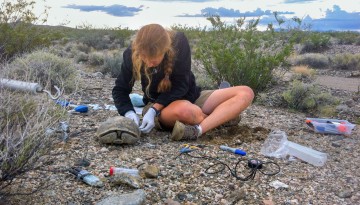
A new method could be used by biologists to estimate the prevalence of disease in free-ranging wildlife and help determine how many samples are needed to detect a disease.
On Dec. 12, Jamila Michener offered expert testimony during a New York State Senate committee hearing focused on the causes and effects of poverty in the state’s small and midsized cities.
When Dead & Company came to Cornell in May for a benefit concert commemorating the Grateful Dead’s famed “Cornell ’77” show, it drew thousands to Barton Hall. The March announcement of the show was the most-viewed Chronicle story of 2023.
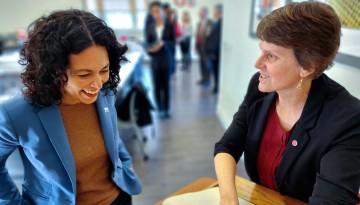
USDA Deputy Secretary Xochitl Torres Small visited Cornell AgriTech Friday, Dec. 8 as one of her visits to land-grant institutions focusing on specialty crops, ag tech innovation and local foods.
A piece of synthesizer history has been given an unexpected second life at Cornell, after eight months of meticulous and often confounding work by a group of synthesizer builders.
Writer Vladimir Nabokov’s deep interest in and connection to the natural world and his cross-pollinating interests in the sciences and the arts were the focus of a new seminar, “Nabokov, Naturally,” taught in fall 2023.
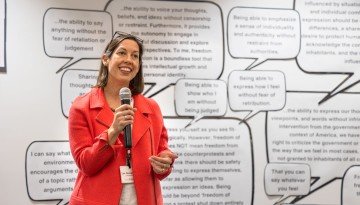
A symposium led by the Department of Communication brought together more than 100 scholars, students and community members to discuss topics such as histories of media and propaganda, content moderation on social media, public opinion as freedom of expression, and how freedom of expression relates to our other core values and responsibilities as a university.
What’s Black, White and Big Red All Over? It’s a scoop of newspaper-inspired ice cream – one of four finalist flavors created by students – based on Cornell’s Freedom of Expression theme year.
Cornell sustainability and ecological transformation experts identified three strategies businesses can implement to thrive – and protect the planet – in a changing climate.