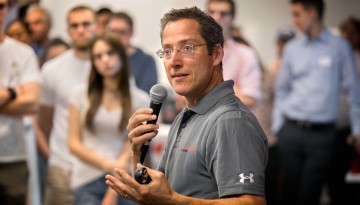
“Startup Launch – Liftoff with Legal 101 for Entrepreneurs,” was created by Zach Shulman and a team of corporate and intellectual property lawyers at WilmerHale,
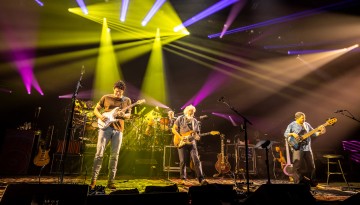
The 2030 Project has launched a new Climate Solutions Fund and announced 15 new Research-to-Impact Fast Grants, financed in part by Dead & Co. concert proceeds.
Researchers have demonstrated the use of artificial-intelligence-selected natural images and AI-generated synthetic images as neuroscientific tools for probing the visual processing areas of the brain.
Cornell’s Content Writing online certificate program, offered through eCornell, empowers students with techniques to present information succinctly and engage readers with actionable next steps.
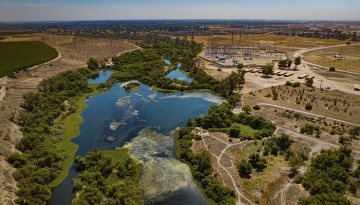
An interdisciplinary collaboration used paleo information and reconstructed weather scenarios to better understand California’s flood and drought risks and how they will be compounded by climate change.
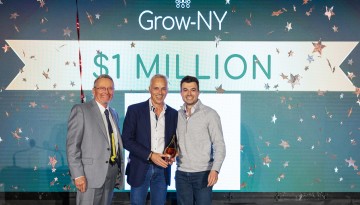
Hypercell Technologies of Peachtree Corners, Georgia, was named the $1 million grand prize winner of the fifth annual Grow-NY Food and Agriculture business competition. Six other winners split a combined $3 million in awards.
Josh Manser, a 15-year employee of the Cornell University Agricultural Experiment Station (Cornell AES), has been promoted to supervisor of the Kenneth Post Laboratory greenhouses on Tower Road.
Strogatz’s and Lewis’ work was selected by the National Academies of Sciences, Engineering, and Medicine from among 500 entries published or aired in 2023.
The Feed the Future Innovation Lab for Crop Improvement hosted global scholars for intensive training on plant breeding and social science at Cornell University in October.