The initiative has supported faculty initiatives ranging from a project to design indigenous seed storage; a documentary on rural LGBT life; and the development of architectural designs for a new elderly center for the Onondaga Nation.
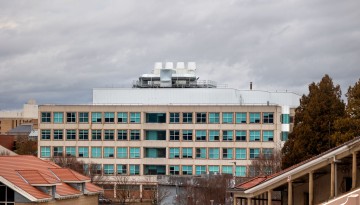
Campus engineers have verified that the building – tailored for energy efficiency, including a recent retrofit of four rooftop exhaust stacks to recover heat – now saves the university nearly $670,000 a year.
Julia Fritsch ’25, Cristina Kiefaber ’25, and Ashley Koca ‘25 have been selected as the 2024 Harry Caplan Travel Fellows, supported by the Department of Classics.
During three events March 13-15, Lenka Zdeborová will explore how principles from statistical physics provide insights into challenging computational problems.
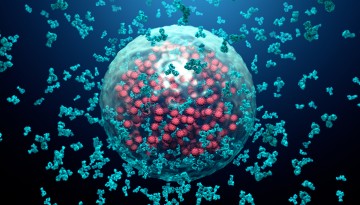
Scientists have long believed that a newborn’s immune system was an immature version of an adult’s, but new research shows that newborns’ T cells – white blood cells that protect from disease – outperform those of adults at fighting off numerous infections.
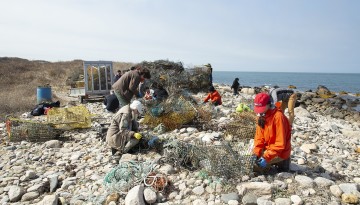
Faculty, staff and community partners are working together to address community needs — and they’re getting students involved with support from Engaged Opportunity Grants from the Einhorn Center for Community Engagement.
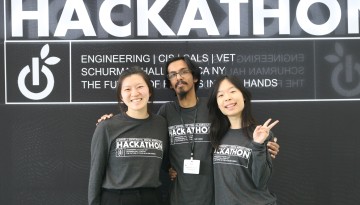
More than 120 students took part in the Digital Agriculture Hackathon, sponsored by the Cornell Institute for Digital Agriculture and Entrepreneurship at Cornell.
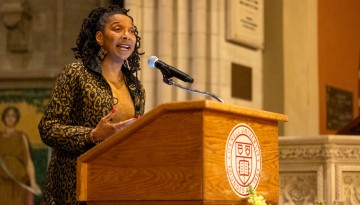
Kimberlé Crenshaw ’81, a legal scholar, reflected on the ways Dr. Martin Luther King Jr.’s influence shaped her personal, academic and professional journey.