A collaboration between researchers from Cornell and the University of Pennsylvania found that most successful deep neural networks follow a similar trajectory in the same “low-dimensional” space.
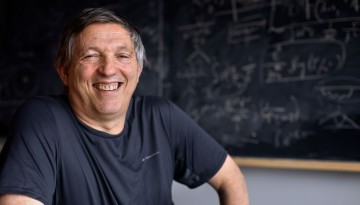
Professor Yuval Grossman has been traveling to Israel to lead math and physics activities with young people in Arab villages since 2019. His most recent trip was in January.
Margarita Amalia Suñer, professor of linguistics emerita in the College of Arts and Sciences (A&S), died in Ojai, California on Feb. 29 after a long bout with Alzheimer’s disease. She was 82.
When Lifespan Labs human development researchers in the Psychology Department needed a better way to schedule and enter family data for their studies, they partnered with the CIT Enterprise Applications team to find an affordable and low-code solution.
“Beyond the World as Picture: Worlding and Becoming the Whole World [devenir tout le monde],”will examine philosophical accounts of the ways in which we organize the concept of reality.
Panelists who have studied in countries ranging from Denmark to Singapore will speak about their perspectives on gender, sexuality, race and identities that impacted them while abroad during an upcoming global freedom of expression event.
In “The Riddles of the Sphinx: Inheriting a Feminist History of the Crossword Puzzle,” media scholar Anna Shechtman combines a history of the crossword highlighting its early women innovators with her memoir of a personal challenge.