Comparing Britain, the United States and France with the Soviet Union, Nazi Germany and the Islamic Republic of Iran, Richard Bensel uncovers a paradox at the heart of every modern state founding.
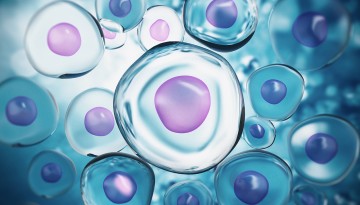
A new method for analyzing protein crystals – developed by Cornell researchers and given a funky two-part name – could open up applications for new drug discovery and other areas of biotechnology and biochemistry.
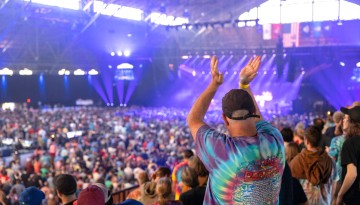
The Big Red was awash in tie-dye May 8 as Dead & Company came to Barton Hall for a jubilant benefit show that had multiple generations celebrating the return of members of the Grateful Dead to the site of one of their most historic shows.
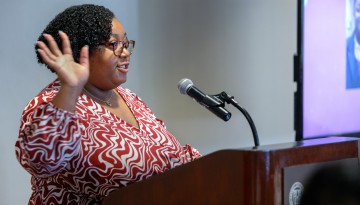
An enthusiastic audience of 100 Cornellians celebrated academic achievements and community at the Office of Academic Diversity Initiatives’ annual Honors Award Ceremony on May 5.
Two Cornell faculty members have been named Freeman Hrabowski Scholars by the Howard Hughes Medical Institute, in recognition of their potential to become leaders in their research fields and to create diverse and inclusive lab environments.
Three students and a recent graduate have won national scholarships that will prepare them for future global leadership and careers in STEM and public service. A fifth student received an honorable mention.
Doctoral students Chijioke Onah (English language and literature) and Nic Vigilante (music) were selected as two of 45 inaugural Mellon/American Council of Learned Societies (ACLS) Dissertation Innovation Fellows.