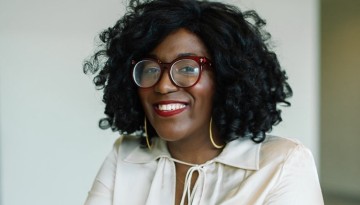
The talk “Reframing Boobie Miles: Racial Iconicity and the Transmedia Black Athlete,” by Dr. Samantha N. Sheppard, will explore the meaning of the black athlete, using Boobie Miles, as portrayed in the multimedia franchise “Friday Night Lights,” as her case study.
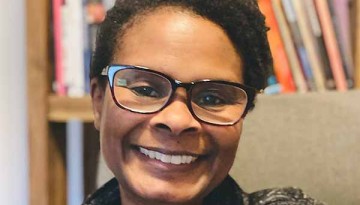
Kim Gallon, associate professor of history at Purdue University, will demonstrate how computational humanities offers an opportunity to redefine “crisis” through the Black American experience and turn it into a defining moment for the recovery and reimagination of Black humanity.
During a three-year Klarman Postdoctoral Fellowship, Amalia Skilton will study joint attention behaviors – which include pointing – by doing field work in Peru's Amazon basin.
Ziad Fahmy won a 2021 book prize from the Urban History Association (UHA) for “Street Sounds: Listening to Everyday Life in Modern Egypt." Fahmy’s book was recognized for Best Book in Non-North American Urban History.
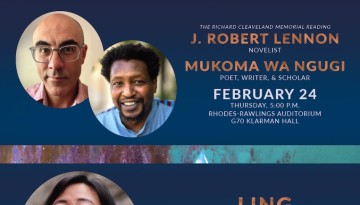
Beginning Feb. 24, the Spring 2022 Barbara & David Zalaznick Reading Series will feature a wide range of artistic styles and voices from around the world.
A new study from Cornell University finds that fish are far more likely to communicate with sound than previously thought — and some fish have been doing this for at least 155 million years.