Undergrads from the School of Hotel Administration collaborated with students from a range of disciplines to create Cornell Blockchain, a club that aims to develop the next generation of blockchain leaders.
Nobel and Pulitzer Prize-winning author Toni Morrison, M.A. ’55, will be one of six women inducted into the National Women’s Hall of Fame in Seneca Falls, New York. The virtual induction ceremony is scheduled for Dec. 10.
Christopher Morrison Pierce, M.S. ’19, a doctoral candidate in physics, and Brennan Hyden, a doctoral candidate in plant breeding, have been chosen for the Office of Science Graduate Student Research Program.
The “One Health” approach is perfectly suited to tackling the COVID-19 pandemic, the most serious public health crisis in recent history, Cornell researchers said during the university’s COVID-19 Summit, a virtual event held Nov. 4-5.
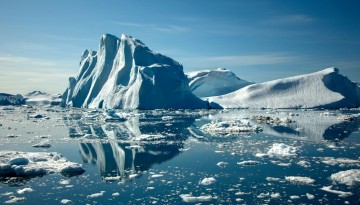
Thanks to $1 million in new grants, Cornell scientists will model adding reflective aerosols into the stratosphere, which may deflect enough sunbeams to reduce Earth’s temperature and limit climate change.
Poet Valzhyna Mort has been a voice in news outlets and on social media during pro-democracy protests in her native Belarus. But the poetry collected in “Music for the Dead and Resurrected” is not about a specific political or social subject.
Seven Cornell students and recent alumni received Fulbright U.S. Student Program awards to conduct research or teach abroad in 2020-21. Fulbright activities are currently suspended until January 2021.
Warren Knapp, 82, professor emeritus of meteorology and climate in the Earth and atmospheric sciences, and the second director of Cornell’s Northeast Regional Climate Center, died Oct. 3 in Ithaca.