Isabel Wilkerson, author of “The Warmth of Other Suns” and “Caste,” will deliver the Cornell Center for Social Sciences’ annual Distinguished Lecture in the Social Sciences at 6:30 p.m. Oct. 21.
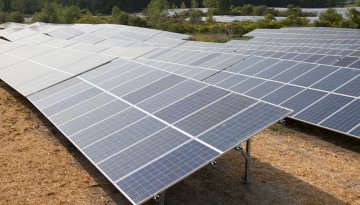
Engineering professor Max Zhang has been awarded a NYSERDA grant to determine efficient solar farm array configurations so the state can avoid land-use conflicts or spoiling precious agricultural space.
The Carl Sagan Institute is getting a boost from an unexpected source: Fiat Chrysler Automotive. The company’s ad for its new Wrangler 4XE plug-in hybrid features the late astronomer Carl Sagan’s famous “Pale Blue Dot” monologue and images.
The Office of Engagement Initiatives recently awarded Engaged Curriculum Grants to 19 teams of faculty and community partners that are developing community-engaged learning courses, majors and minors across the university.
In his new book “Life, Death and Other Inconvenient Truths: A Realist’s View of the Human Condition,” Shimon Edelman offers a reference guide to human nature and human experience.
A total of 122 readers, plus a number of Cornell musicians, paid tribute to the late Toni Morrison, M.A. ’55, on Oct. 8 during a marathon reading of “The Bluest Eye,” her debut novel.
Vijay Varma, a Klarman Postdoctoral Fellow in physics, is using his three-year appointment to research gravitational waves and their sources, which include black holes and neutron stars.
A committee formed by the American Indian and Indigenous Studies Program is exploring Cornell’s history as a land-grant institution and the nation’s dispossession of Indigenous peoples.
Baobao Zhang’s three-year Klarman Postdoctoral Fellowship in the College of Arts and Sciences is an opportunity to research technology policy, particularly on the governance of emerging technologies such as AI.