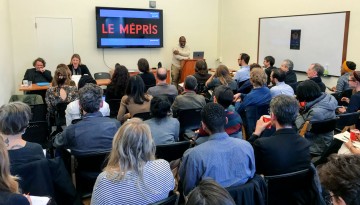
Cornell’s Southeast Asia Program has received a four-year, $275,000 Luce Foundation grant to strengthen graduate education in the field, working with National Resource Centers across the country.
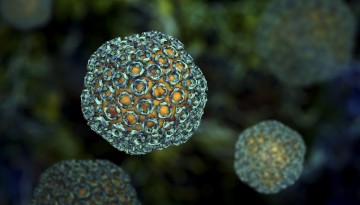
In the midst of COVID-19, it’s common to feel stress levels rise when we hear the word “virus.” But Cornell-led research reveals that the sound of the word itself was likely to cause stress – even before “corona.”
A single protein derived from a common strain of bacteria found in the soil will offer scientists a more precise way to edit RNA, according to new Cornell food science research.
A pair of binary neutron stars in the Milky Way galaxy – discovered by a pulsar survey developed at Cornell – is giving researchers a front-row seat what may be the stars’ eventual cataclysmic merger.
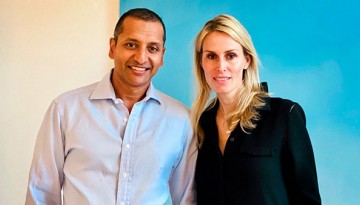
A $1 million gift from Robert ’92 and Carola Jain to the College of Arts and Sciences will support Black A&S students with demonstrated need, and others who enhance Cornell’s diversity, equity and inclusion.
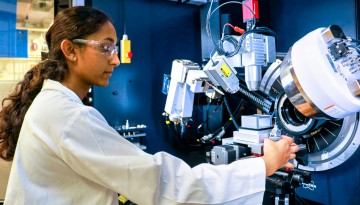
The Cornell Center for Materials Research is helping startup companies create new, innovative products by connecting them with university researchers while also boosting economic development in New York state.
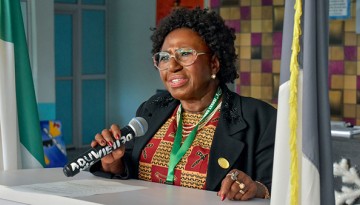
N’Dri Thérèse Assié-Lumumba began her term as director of the Einaudi Center's Institute for African Development July 1. She is leading IAD’s contributions to the center’s new thematic initiative on global racial justice.