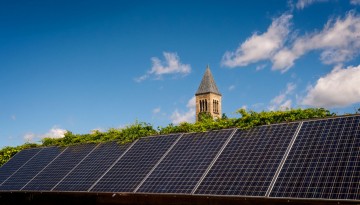
Cornell has earned a platinum sustainability rating – the top status – from an international group that tracks environmental stewardship for over 1,000 college campuses.
“The Hidden Life of Rosa Parks,” a new TED-Ed animated video written by Riché Richardson, explores Parks’ work with the NAACP, bus boycotts, and her lifelong fight against racial inequality.
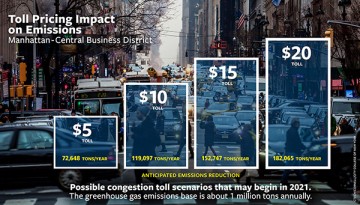
Cornell and the City College of New York research shows that by creating steep tolls for cars to enter Manhattan, traffic congestion and greenhouse gas emissions could be reduced.
David I. Grossvogel, the Goldwin Smith Professor of Comparative Literature and Romance Studies Emeritus and founder of the influential literary journal Diacritics, died June 14 at age 94. He taught at Cornell from 1960 to 2000.
Four members of the Congressional Black Caucus shared reflections on race and justice in America and potential legislative solutions during a virtual discussion June 15 hosted by Cornell's Institute of Politics and Global Affairs.
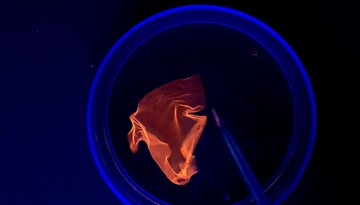
A Cornell-led collaboration is turning DNA from organic matter – such as onions, fish and algae – into biodegradable gels and plastics. The resulting materials could be used to create plastics and methods for drug delivery.
The Cornell University Glee Club and Chorus perform on a new CD of works composed by Roberto Sierra, the Old Dominion Foundation Professor in the Humanities.
Recent global and national events have deepened what was already a looming crisis for American democracy. A webinar, “The Protests and US Democracy,” will examine the effect.
Through a partnership between the Cornell Atkinson Center for Sustainability and EDF, four Cornell faculty members have received new grants for regional sustainability projects with global implications.