Collaborating across disparate disciplines to tackle the grand challenges facing humanity is intrinsic to Cornell’s unique brand of research innovation.
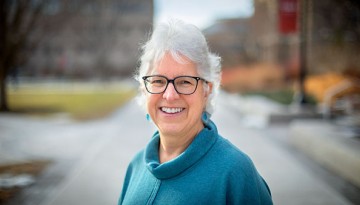
Graduate School Dean Barbara Knuth is inspired daily by the scholarly work of Cornell’s graduate students. Their innovations and intellectual energy are vital to Cornell’s research productivity.
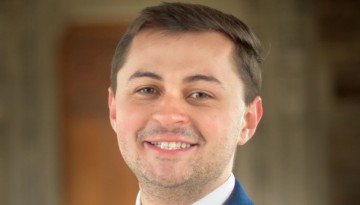
Thomas Nolan ’20, a Near Eastern studies and government double major in the College of Arts and Sciences, has been awarded a Fulbright teaching fellowship to work this fall in the country of Georgia.
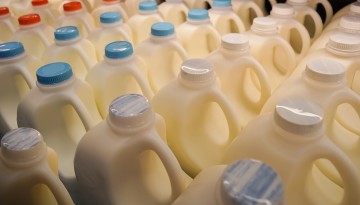
For families in western and central New York hurt by severe economic conditions brought on by the coronavirus pandemic, relief is on the way – in the form of cold milk, delivered to local food banks.
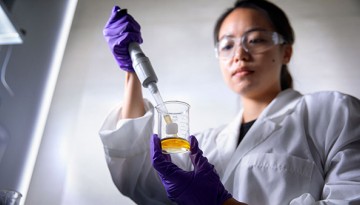
Doctoral students Sri Lakshmi Sravani Devarakonda and Cheyenne Peltier have been named winners of the 2019-20 Cornelia Ye Outstanding Teaching Assistant Award.
A monumental calligraphy scroll on display in the Bartels Gallery in the Herbert F. Johnson Museum of Art, by Tong Yang-Tze, one of Taiwan’s foremost calligraphers, can be viewed online.
During this time of social distancing and university life interrupted by the ongoing coronavirus (COVID-19) outbreak, the Chronicle offers a variety of opportunities to engage with online Cornell resources and programming.
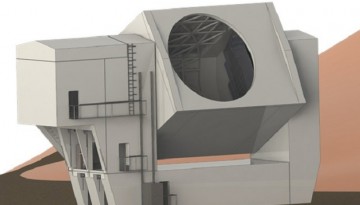
Due to the COVID-19 pandemic, the inaugural CCAT-prime telescope collaboration meeting, April 7, was switched to a virtual gathering, but science regarding the project advanced.