The Cornell Center for Materials Research announces that five New York companies will receive grants through the center's JumpStart program. The projects receive up to $5,000 in matching funds for costs.
Striving to become greener than ever, Martha Van Rensselaer Hall West and the residential complex Court-Kay-Bauer and Mews halls won the 2014 Energy Smackdown 2014 - saving Cornell thousands of dollars.
Birth of chic: Blake Uretsky ’15 won a $30,000 Geoffrey Beene national scholarship from the YMA Fashion Scholarship Fund, for her design of maternity wear that monitors the vitals of expectant mothers.
In researching his new book, “30 Lessons for Loving: Advice from the Wisest Americans on Love, Relationships, and Marriage” gerontologist Karl Pillemer found that the search for love doesn't end in our golden years.
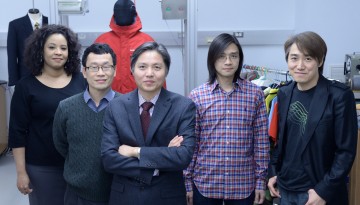
Warming up to a brisk idea to save building energy, the U.S. Department of Energy has awarded Cornell researchers a $3 million grant to create new clothes that integrate "air-conditioning" into undergarments.
Cornell gerontologist Karl Pillemer will become director of the Bronfenbrenner Center for Translational Research Jan. 15, taking over for John Eckenrode, who has been the center's director since it was founded in 2011.
The new book "Academic Leadership in Higher Education: From the Top Down and the Bottom Up," co-edited by Cornell professor Robert Sternberg, offers advice for new faculty administrators.
Food industry professionals, retailers and suppliers gathered to learn a veritable cornucopia of ideas and concepts at the first Cornell Food Systems Global Summit on Dec. 8.