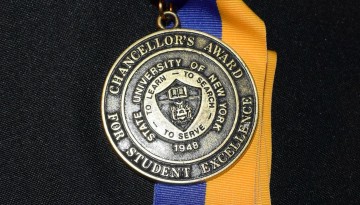
Sixteen faculty and professional staff members in state contract colleges at Cornell are receiving the 2019-20 State University of New York Chancellor’s Awards for Excellence.
The Cornell Center for Social Sciences has awarded $118,000 in spring grants supporting ambitious research projects and conferences involving two-dozen faculty members and resarchers.
The Cornell Center for Social Sciences has awarded nearly $110,000 in rapid response grants to help faculty pursue nine research projects related to the COVID-19 pandemic.
Maureen Waller, professor of policy analysis and management in the College of Human Ecology, is the recipient of Cornell’s fifth annual Engaged Scholar Prize.
Thirty-five outstanding seniors were recognized as 2020 Merrill Presidential Scholars, an honor they share with the teachers and professors who inspired them and contributed to their academic development.
The average American adult is exposed to nearly 600 alcohol ads on TV each year, and more exposure is linked to higher levels of drinking, according to a Cornell study.
The pandemic will have an enormous impact on civil infrastructure, from highways and airports to dams and energy systems, says Richard Geddes, an expert on infrastructure policy.