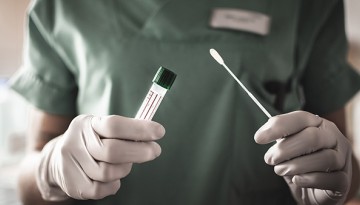
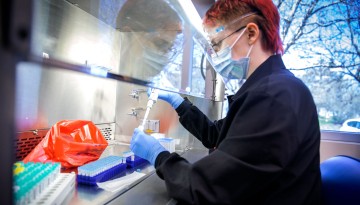
Nasopharyngeal swabs – taken from far back inside the nostril – were found to be more effective at detecting COVID-19 than saliva tests or swabs just inside the nostril or under the tongue.
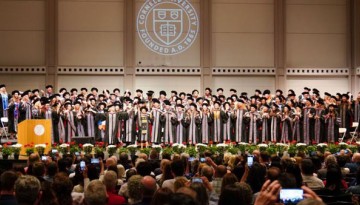
Graduating students with the Cornell University College of Veterinary Medicine celebrated with family, friends, faculty and staff at commencement week events.
Solving problems like climate change could require dismantling rigid academic boundaries, so that researchers of various backgrounds may collaborate through an “undisciplinary” approach.
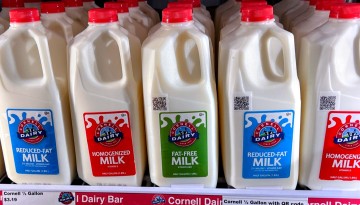
Milk carton “use-by” dates soon may be a quaint relic. A new Cornell study finds that consumers like QR codes, better depicting how long milk is drinkable – creating less food waste.
More than 99% of 474 veterinarians surveyed said they’d encountered useless or nonbeneficial veterinary care in their careers, according to a new Cornell-led study that documents the prevalence of futile care for the first time.
Scientists at the College of Veterinary Medicine are one step closer to understanding the genetic predispositions behind congenital idiopathic megaesophagus.
Cornell startup Antithesis Foods and Bactana were awarded NSF small-business grants, as Guard Medical raises $11 million in Series B investments and C2i launches a disease test in Europe.
Robust collaboration between community partners and Cornell has resulted in more than 2 million COVID-19 tests, saving lives throughout the Finger Lakes region.