As Cornell puts noncritical research on hold, researchers on campus have found that everyone is making extra efforts to help each other through the transition.
At the Cornell University Hospital for Animals, Ntsumi the white African lioness was diagnosed with an intestinal mass that veterinarians surgically removed.
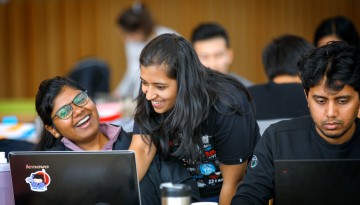
Students in fields ranging from computer science and engineering to business, agriculture and animal science convened at the second Digital Agriculture Hackathon, Feb. 28-March 1, with a shared purpose: to combine their disparate skills to brainstorm ways to make the world a better place.
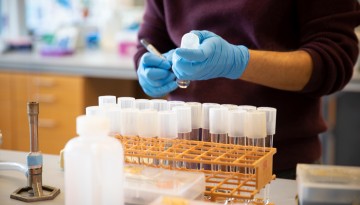
Researchers from Cornell and the Mars Global Food Safety Center can complete whole-genome sequencing to determine salmonella serotypes in two hours and the whole identification process within eight hours.
Most birth control options rely on women to manage, but promising Cornell research from the lab of Paula Cohen, professor of genetics in the College of Veterinary Medicine, may be changing the game by tackling male contraception.
Cornell faculty members are finding answers to questions related to a world on the move with a boost from Cornell’s first Migrations grants, awarded by the “Migrations” Global Grand Challenge.
New research from an interdisciplinary Cornell team has found that it takes as few as 10 minutes in a natural setting for college students to feel happier and lessen the effects of stress both physically and mentally.