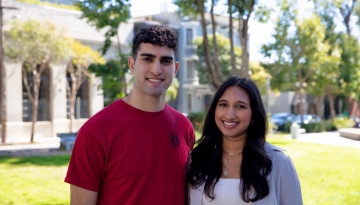
Twelve outstanding early-career scholars have been chosen as the 2026 cohort of Klarman Postdoctoral Fellows to pursue research in the sciences, social sciences and humanities.
Cornell researchers studying microplastics, robotics and machine learning are recent recipients of National Science Foundation Faculty Early Career Development Awards.
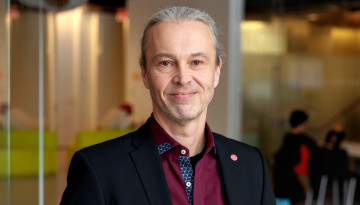
Joachims, professor of computer science and information science and director of the Cornell AI initiative, will coordinate AI across research, education and operations.
In the first large-scale study of its kind, men were equally willing to continue reading a story that featured a woman as the main character as one with a man. Women, however, showed a slight preference for reading stories about other women.
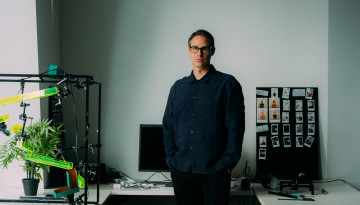
Through rapid prototyping and creative experimentation, Harald and his students explore how emerging technologies can reshape the way we interact with both digital and physical environments.
Digital humanities scholars have developed a computational system to mine maps from nearly 100,000 digitized books from the 19th and early 20th centuries, discovering that just 1.7% of novels include maps, mostly at the beginning or end.
The data inputs that enable modern search and recommendation systems were thought to be secure, but an algorithm developed by Cornell Tech researchers successfully teased out names, medical diagnoses and financial information from encoded datasets.