Collaborating across disparate disciplines to tackle the grand challenges facing humanity is intrinsic to Cornell’s unique brand of research innovation.
A new tool developed by a Cornell Tech team can unobtrusively monitor electronic cigarette inhalations, yielding important information for research into vaping.
Cornell Atkinson is calling for proposals for faculty research related to the global COVID-19 pandemic. The center’s Rapid Response Fund will award seed grants of up to $10,000 for projects.
Students learned just as much in online STEM college courses as they did in traditional classroom settings, and at a fraction of the cost, according to a first-of-its-kind study.
Cornell researchers have developed an automated system that uses machine learning, data analysis and human feedback to automatically verify statistical claims about the new coronavirus.
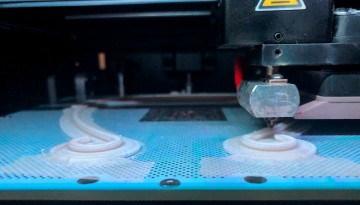
Students, faculty, staff, alumni and community members are working together around the clock to 3D print protective visors for medical workers at Weill Cornell Medicine and local hospitals.