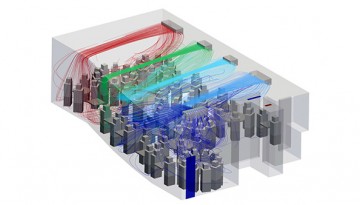
A Cornell-led team has used transdisciplinary systems modeling to calculate the future health benefits of vehicle electrification, driverless cars and ride-sharing in the United States.
David Hysell, Ph.D. ’92, professor in the Department of Earth and Atmospheric Sciences, is using NSF funding to develop radar tools and techniques for monitoring space weather, including the creation of a new radar system at Cornell.
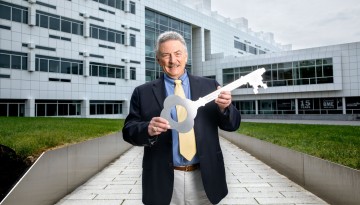
When Lou Walcer ’74 stepped into the new business incubator in Weill Hall 10 years ago, he saw opportunity. Now, the center has enjoyed a decade of success.
Cornell Atkinson welcomes new faculty directors to advance research efforts, strengthen cross-college collaborations, and guide development of new programs.
Mark E. Lewis, director of the School of Operations Research and Information Engineering, and Jamila Michener, associate professor of government, are the recipients of this year’s Faculty Award for Excellence in Research, Teaching and Service through Diversity.
Hadas Ritz, senior lecturer in Cornell’s Sibley School of Mechanical and Aerospace Engineering, won the 2021 American Society of Engineering Education National Outstanding Teaching Award.
Students, faculty and staff were recognized for their commitment to diversity, equity and inclusion and excellence within the graduate community at the 2021 Graduate Diversity and Inclusion Awards and Recognition Celebration.
Designing a recycling strategy for a new generation of photovoltaic solar cells will add a strong dose of environmental friendliness to a green industry.