Cornell leadership will apply principles of institutional restraint to decisions about when and how the university should comment publicly on matters of social and political significance.
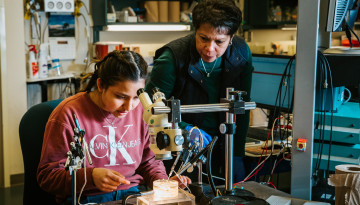
CTI’s “The Art of Teaching” series returns Feb. 11 with “The Art of the Lab.” Faculty panelists will share creative instructional approaches for designing student-centered laboratory experiences.
A publicly available dataset mapping moves between U.S. neighborhoods in far greater detail than standard public data could improve studies of climate risk, affordable housing and economic opportunity.
Four Cornell faculty members are among 99 researchers across the U.S. who have been awarded grants by the U.S. Department of Energy as part of its Office of Science Early Career Research Program.
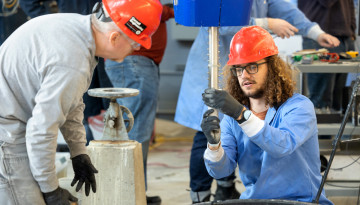
An interdisciplinary collaboration has developed a way to 3D-print concrete underwater – a technique that could transform on-site maritime construction and the repair of critical infrastructure.
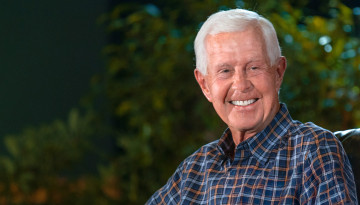
More than $520 million in contributions from David A. Duffield ’62, MBA ’64 – including a new pledge of $371.5 million and a 2025 commitment of $100 million, combined with previous gifts – will establish the Cornell David A. Duffield College of Engineering.
A new Cornell study shows how Europe can sharply reduce its economic vulnerability to imported natural gas, identifying where clean energy investments deliver the greatest impact, and where current strategies leave critical blind spots.